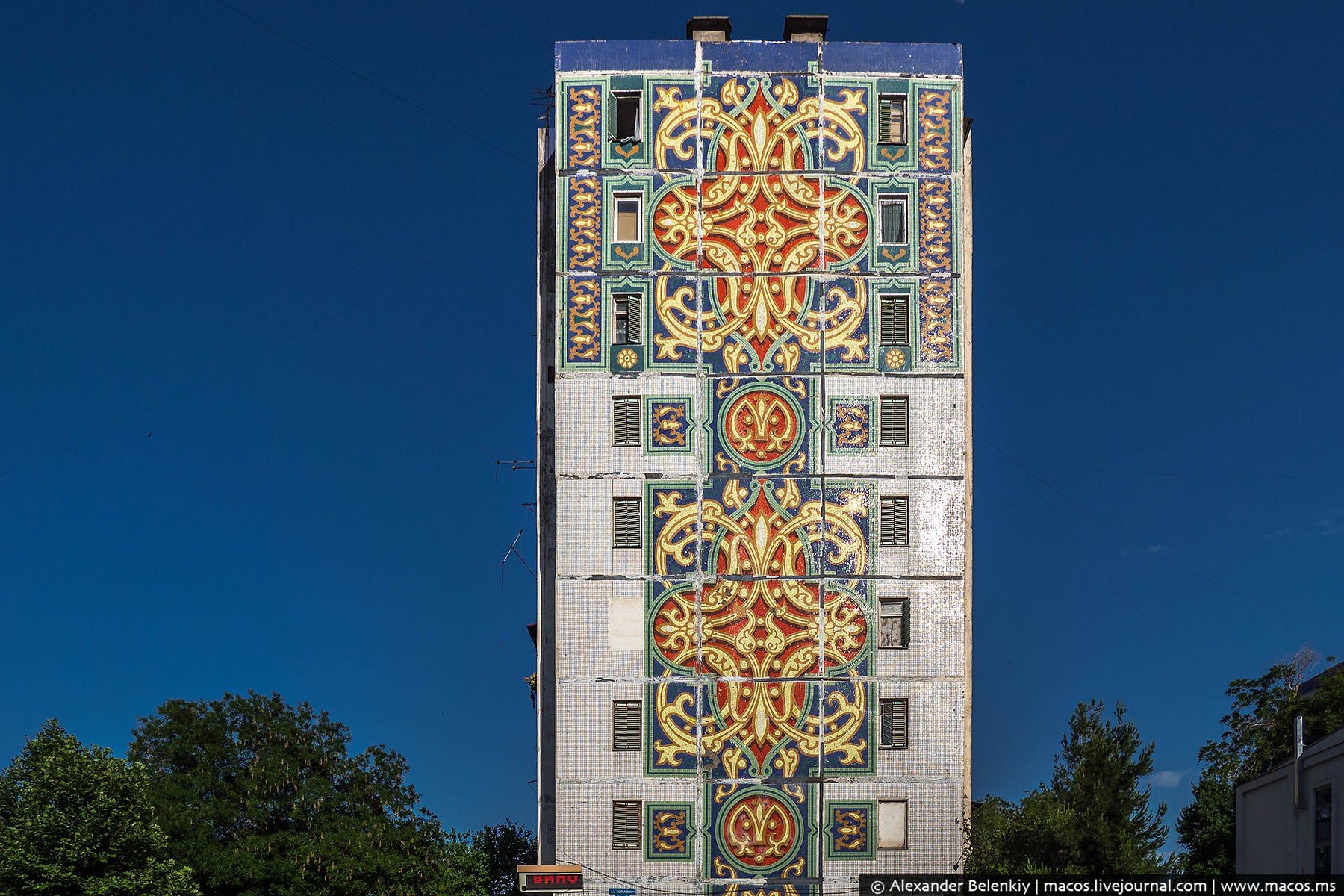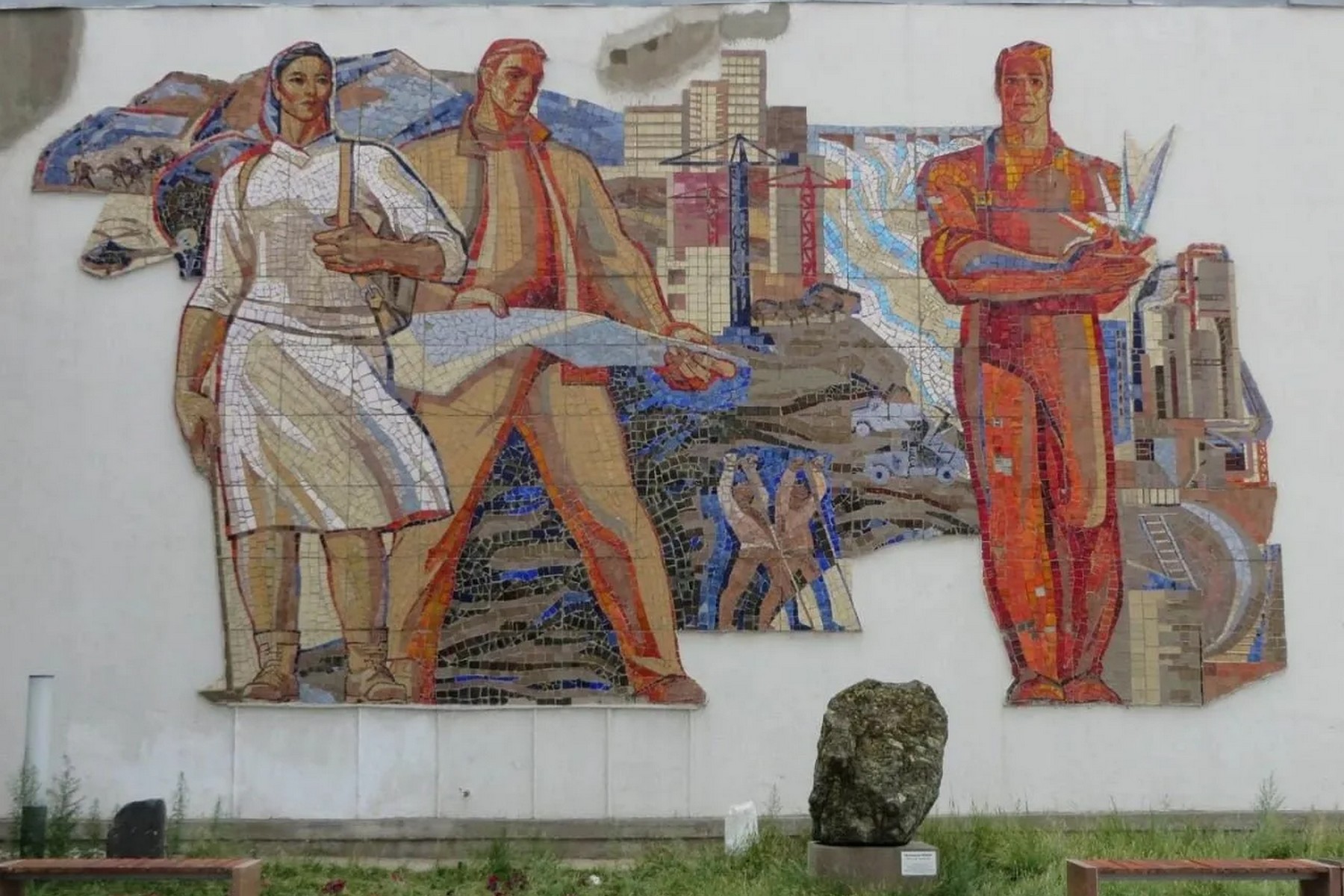
Most travellers arrive in Tashkent looking for a particular version of Uzbekistan: blue-tiled madrasas, bustling bazaars, traditional teahouses and the architectural legacy of the Silk Road. But look beyond the historic centre, towards the apartment blocks, public buildings and broad avenues of the capital, and another story begins to emerge.
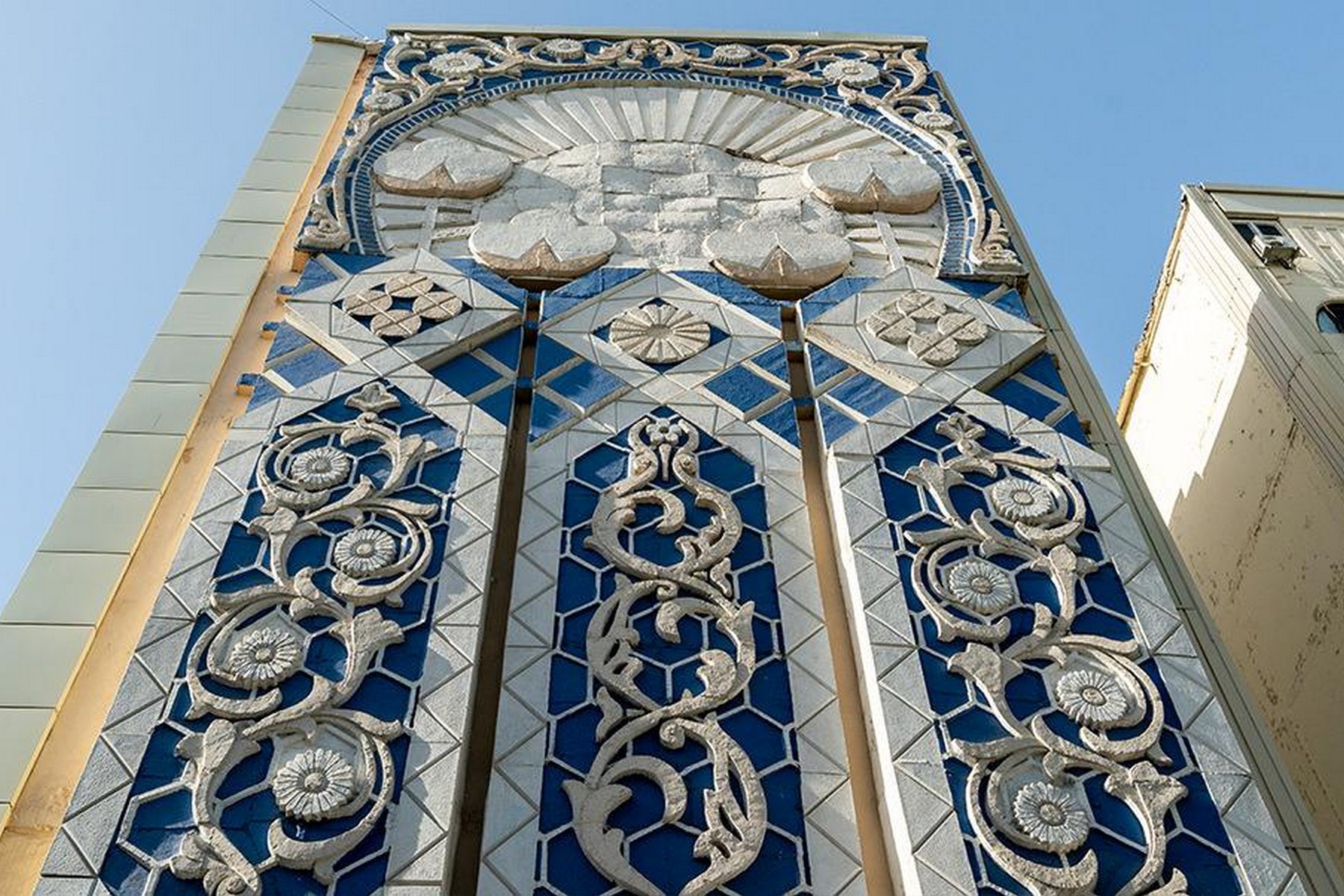
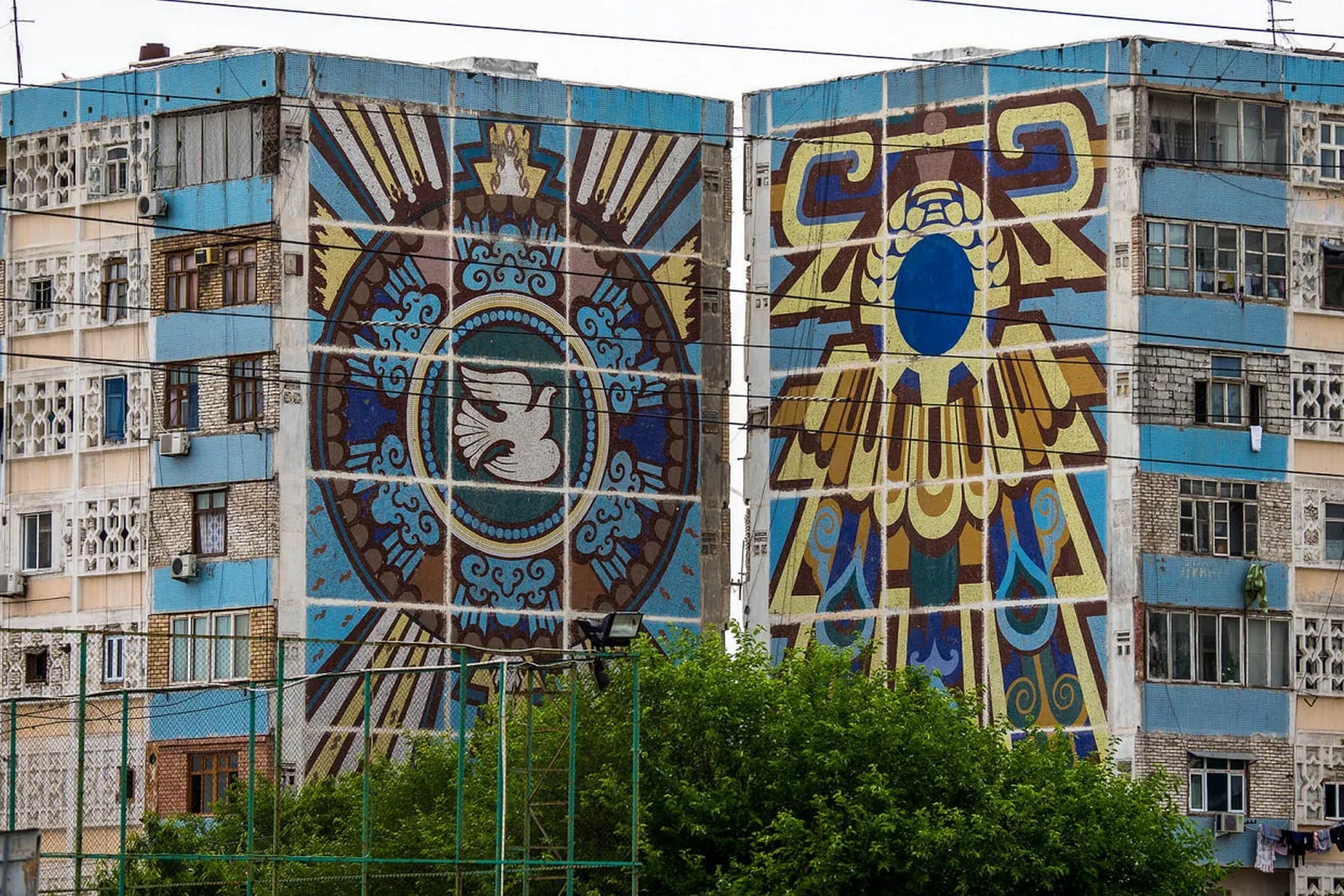
A giant mosaic stretches across the side of a building. A concrete façade reveals an unexpectedly intricate pattern. A public building combines geometric forms with local ornament. Somewhere between Soviet modernism and Central Asian artistic traditions, the city starts to look less like the Uzbekistan in the brochures and more like a place with several architectural identities. This is a side of the country that many visitors never think to explore.
Yet Tashkent’s Soviet-era architecture offers a fascinating way to understand the city’s twentieth-century history, its changing identity and the artistic ambitions of an era that transformed much of Central Asia. The best part? You don’t need to enter a museum. You simply need to look up.
To understand why Tashkent has so much monumental art, it helps to begin with a catastrophe.
On 26 April 1966, a powerful earthquake struck the city, destroying or damaging large numbers of buildings and leaving many residents homeless. The reconstruction that followed transformed Tashkent into a showcase of Soviet urban planning, drawing architects, engineers and construction workers from different parts of the Soviet Union. The result was not simply a city of apartment blocks and wide avenues.
Architects and artists were given opportunities to experiment with new forms, materials and public decoration. Monumental mosaics, ceramic panels, sculptural reliefs and elaborate façades became part of the visual identity of the reconstructed capital. But the most interesting feature of Tashkent’s architecture is that it rarely feels entirely imported.
Modernist concrete structures sit alongside decorative elements inspired by local traditions. Geometric patterns echo the ornament of Islamic architecture. Floral designs recall Central Asian textiles. Traditional motifs appear in buildings that would otherwise look distinctly futuristic.
This combination is often described as Tashkent modernism: a distinctive architectural language in which international modernist ideas meet the artistic traditions and climate of Central Asia.
For visitors, it offers an unexpected perspective on Uzbek identity. The city did not stop being Central Asian when it became Soviet. Its artists continued to negotiate that identity, sometimes in surprising ways.
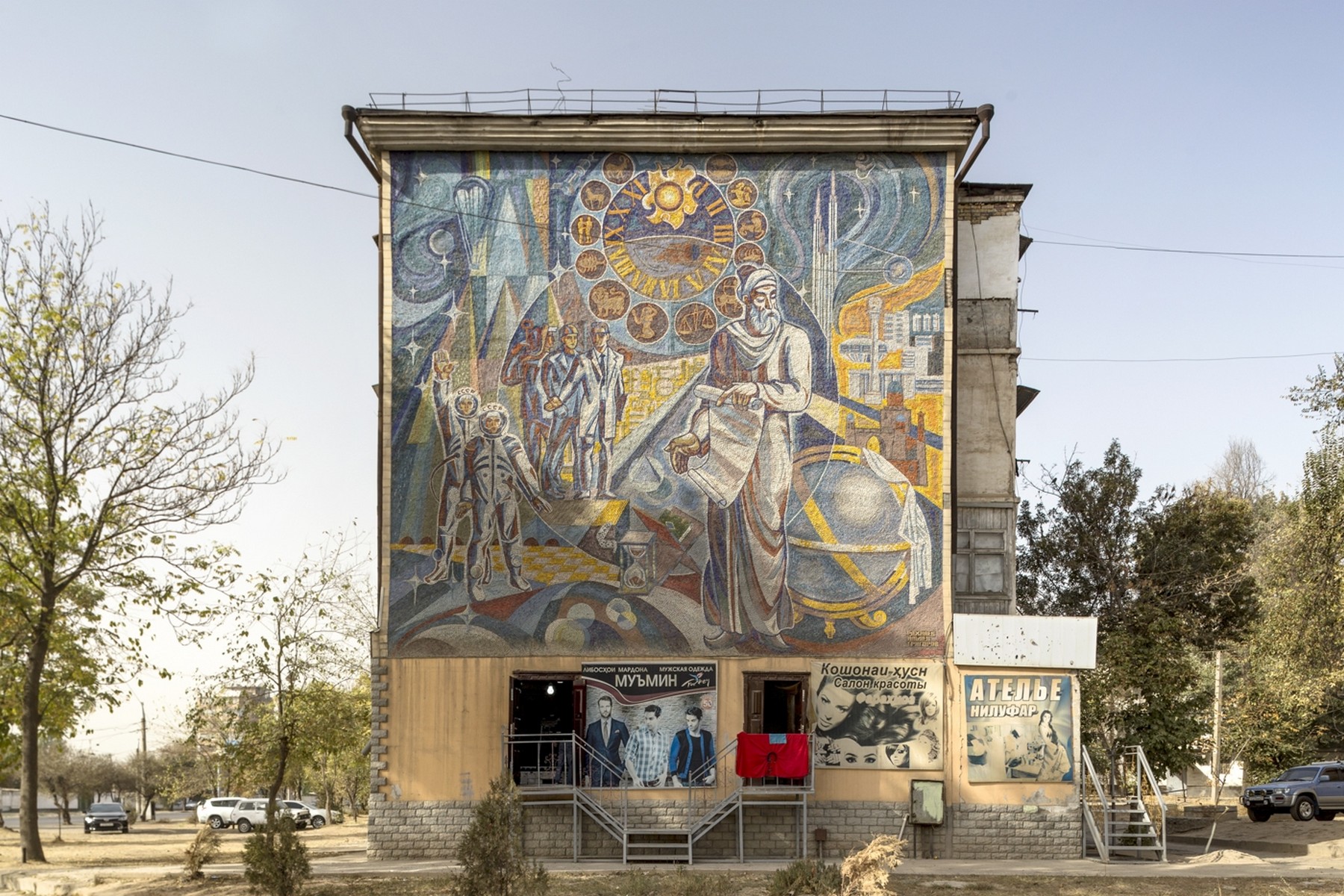
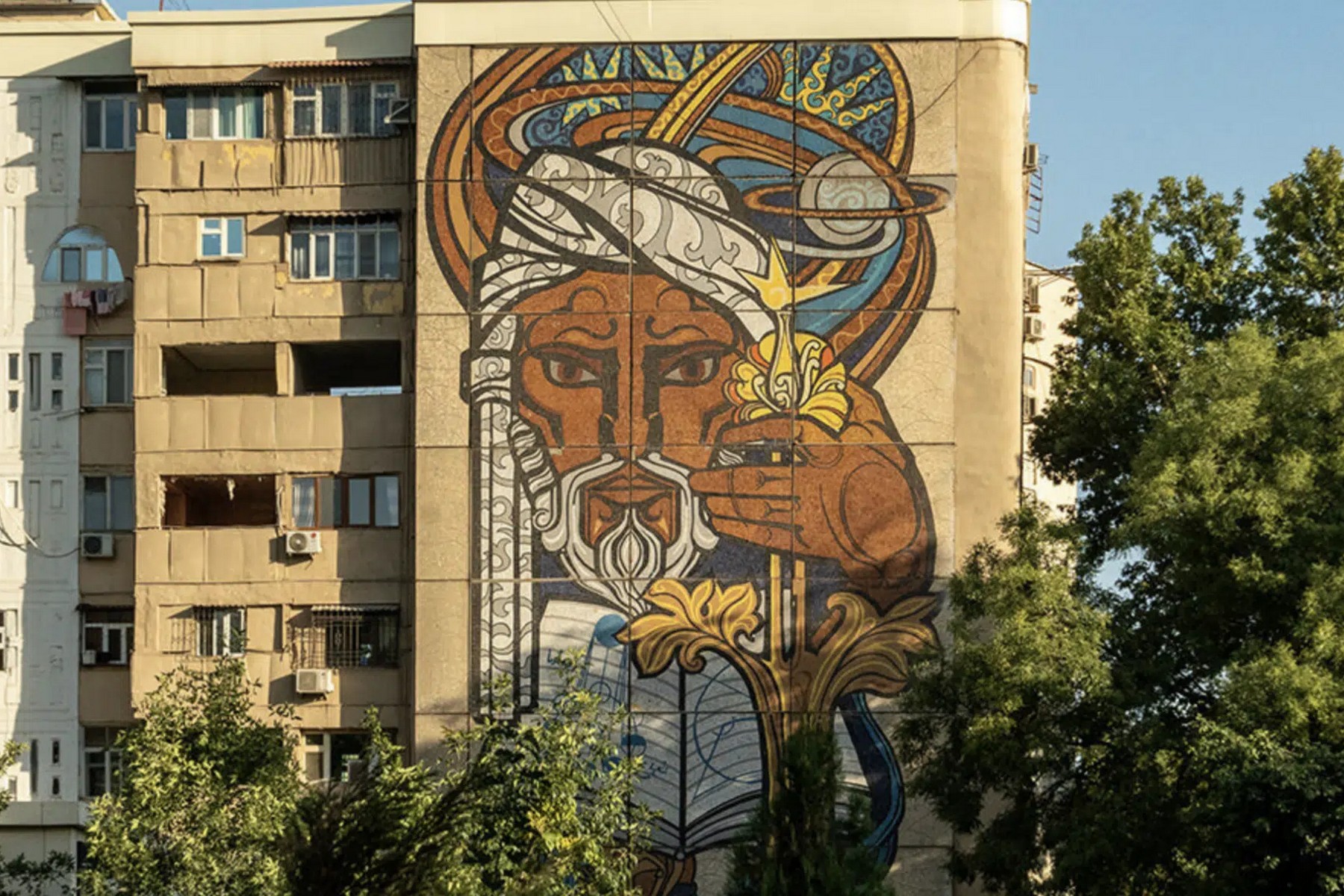
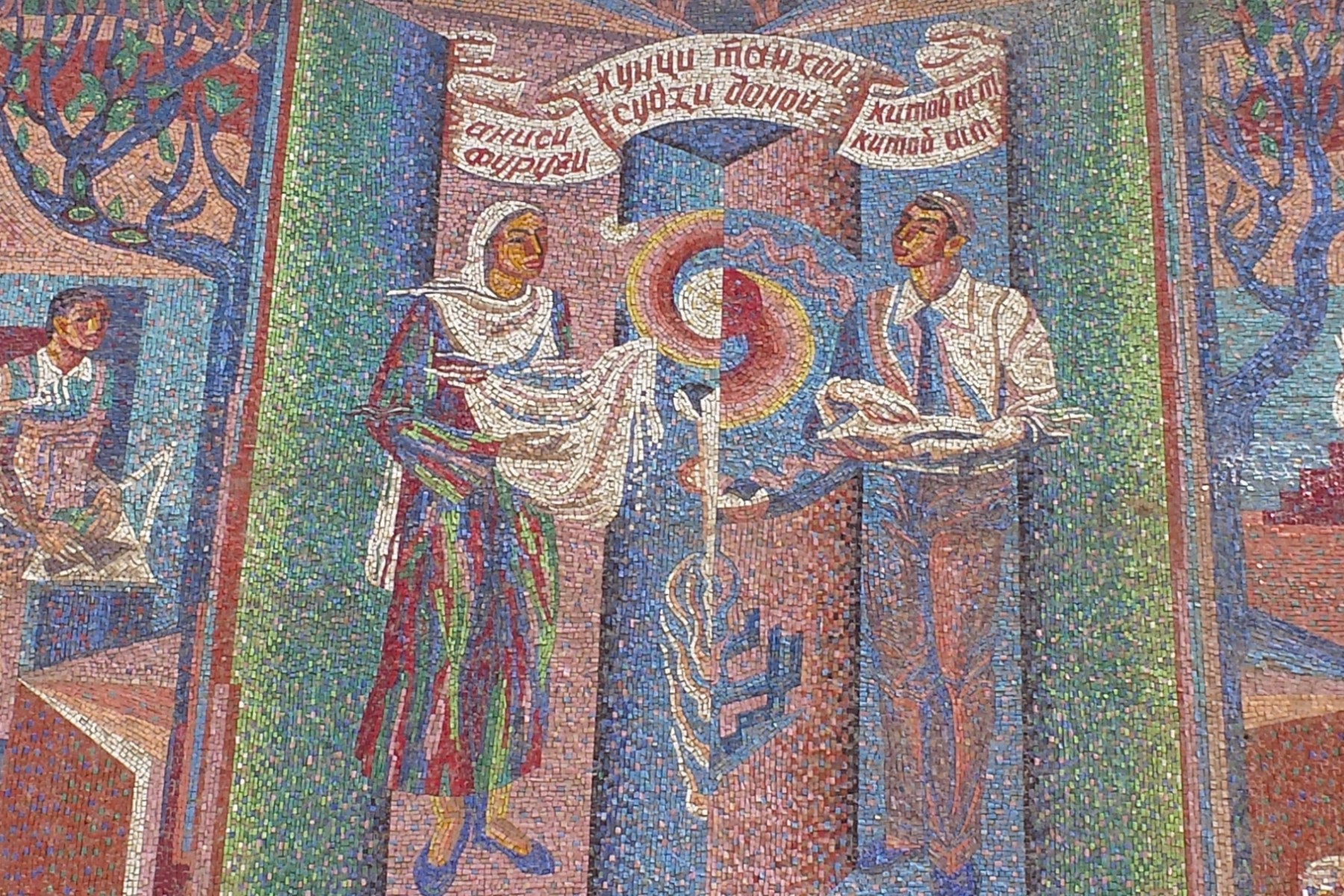
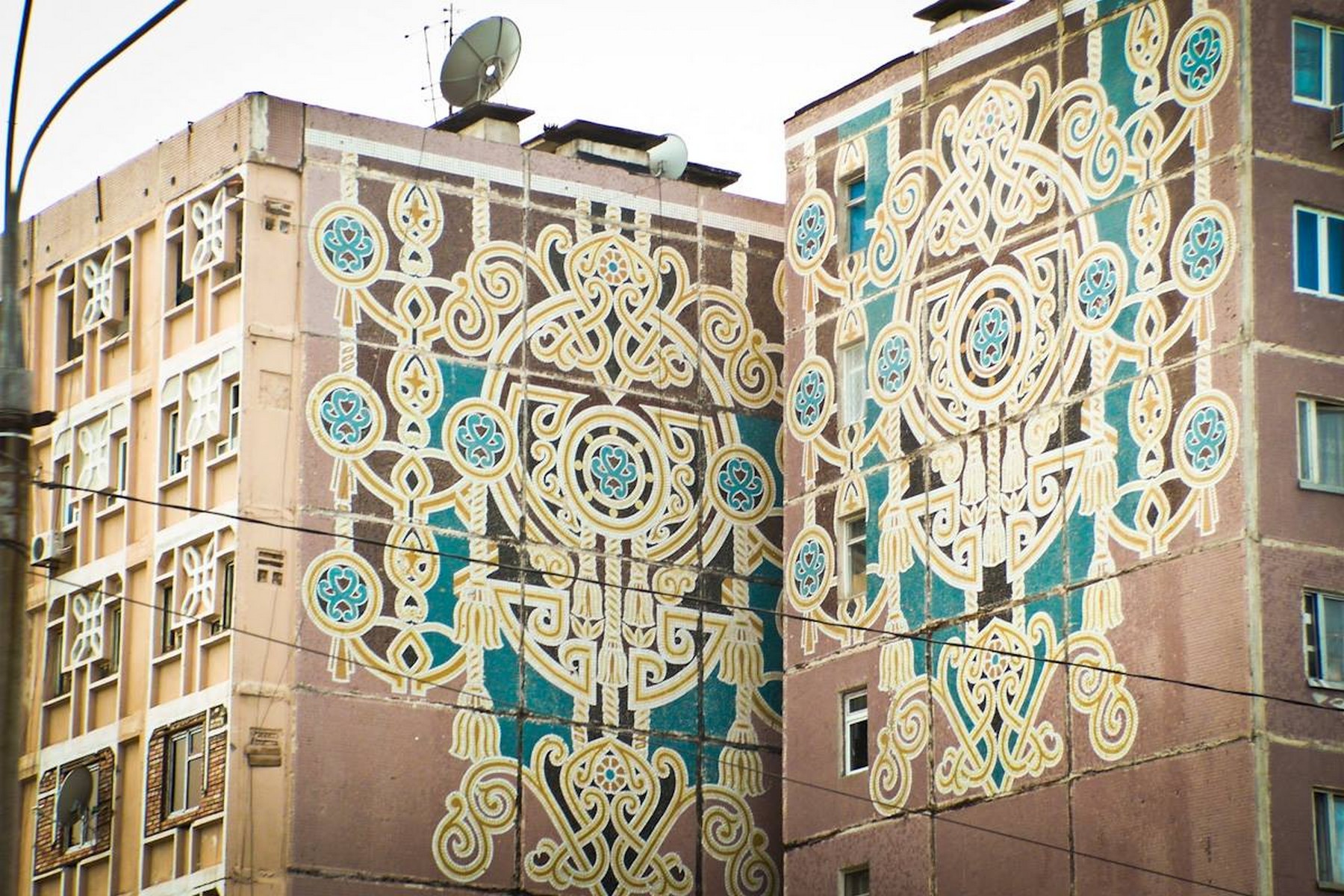
The most rewarding discoveries are often not the grand public buildings, but the residential streets.
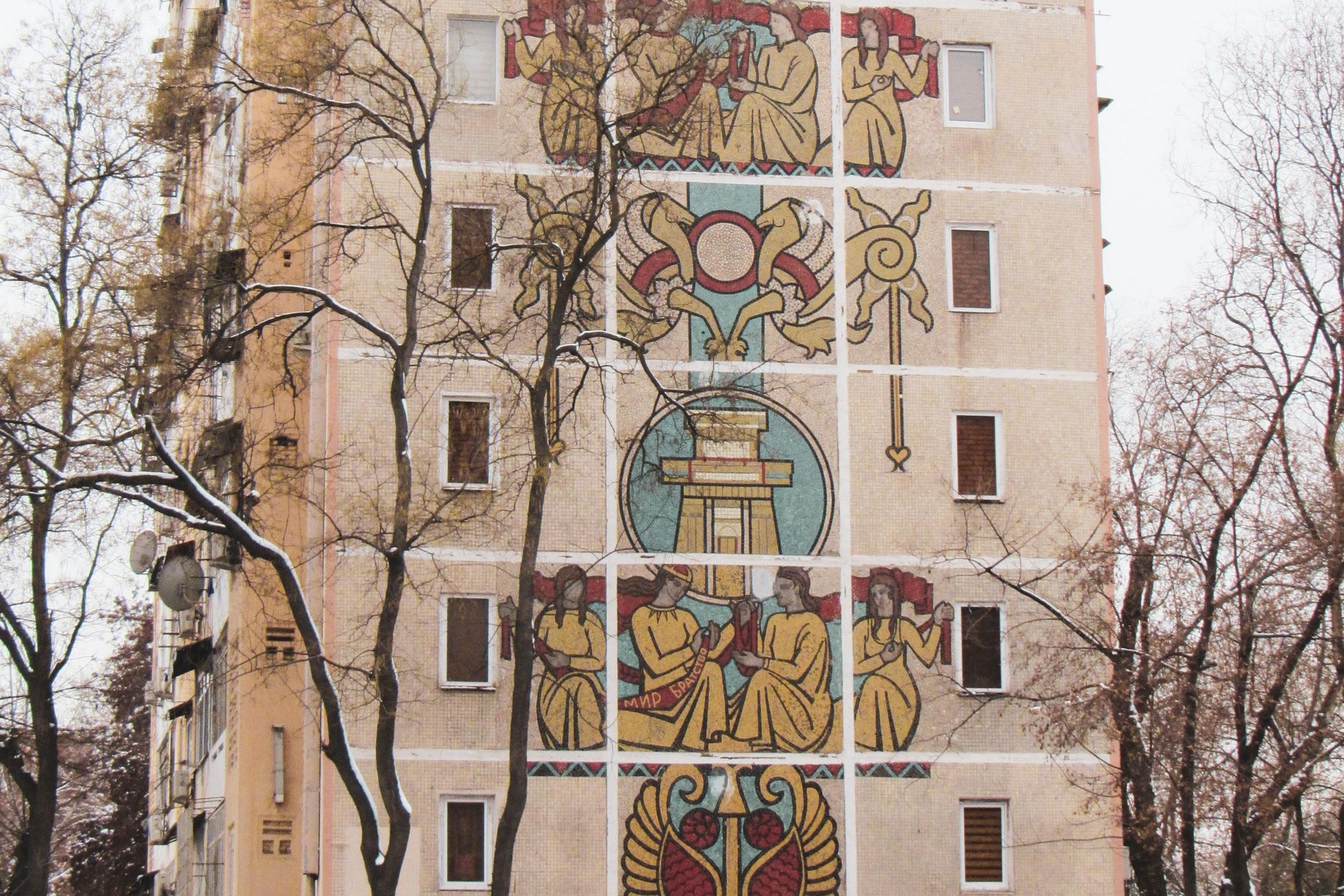
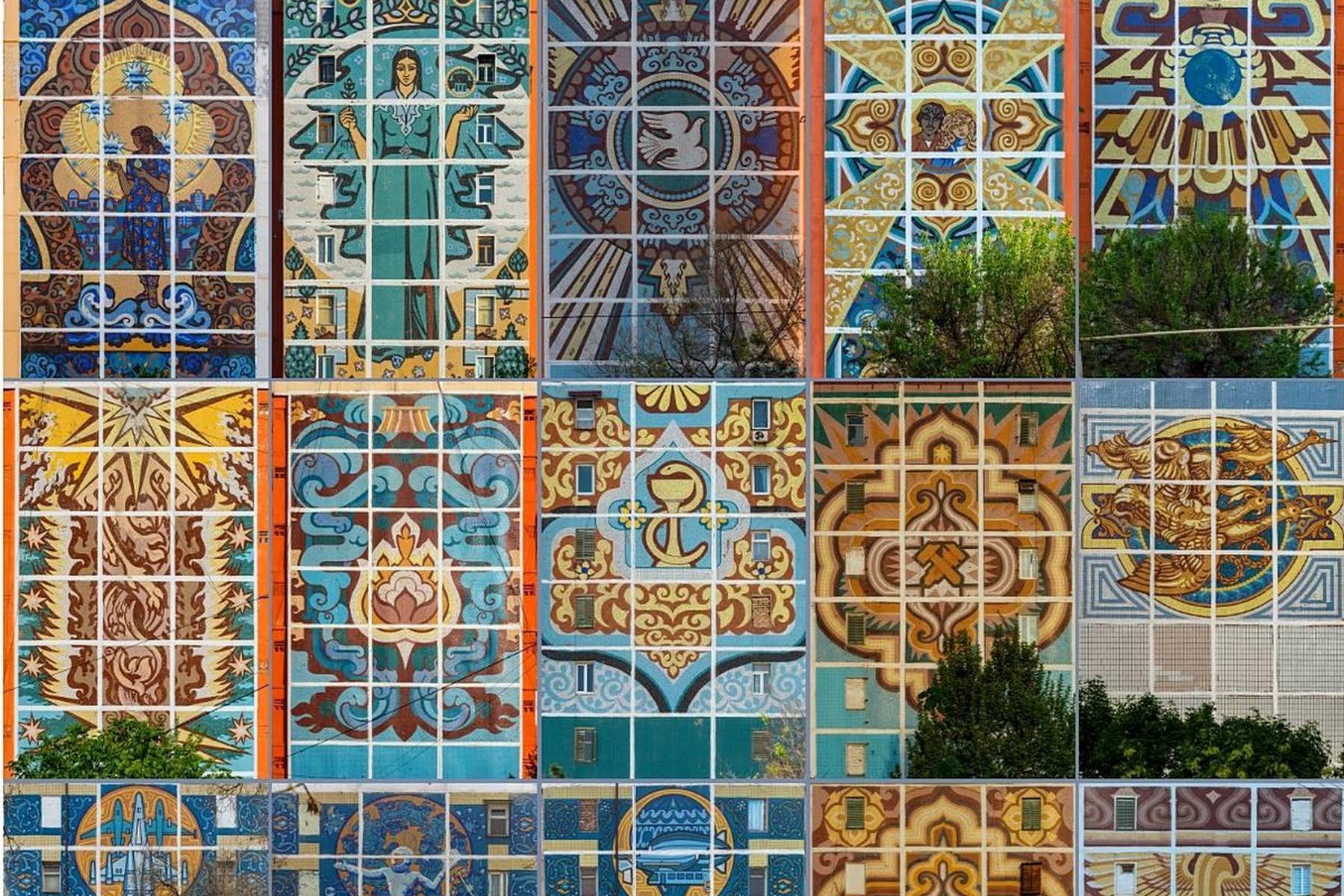
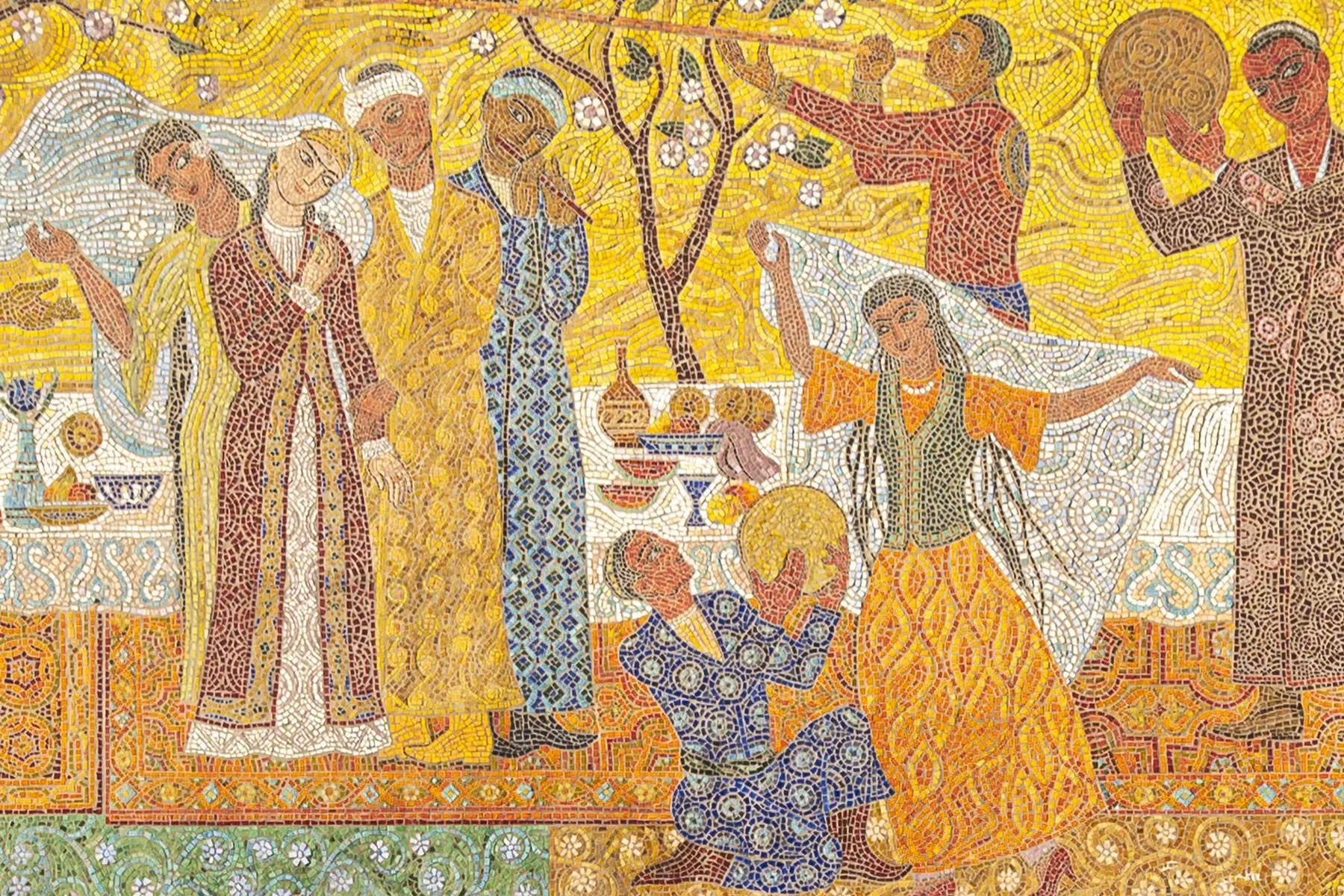
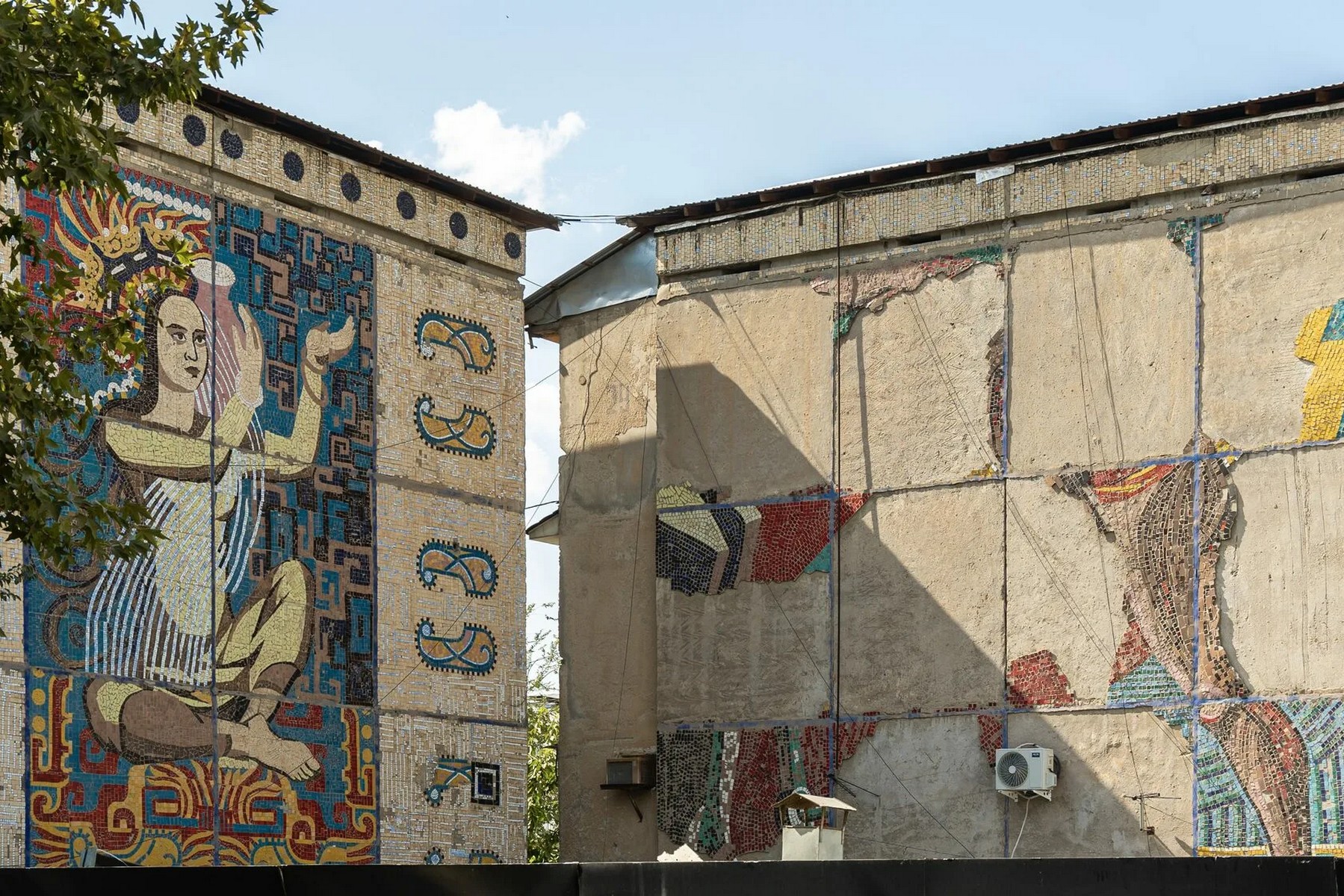
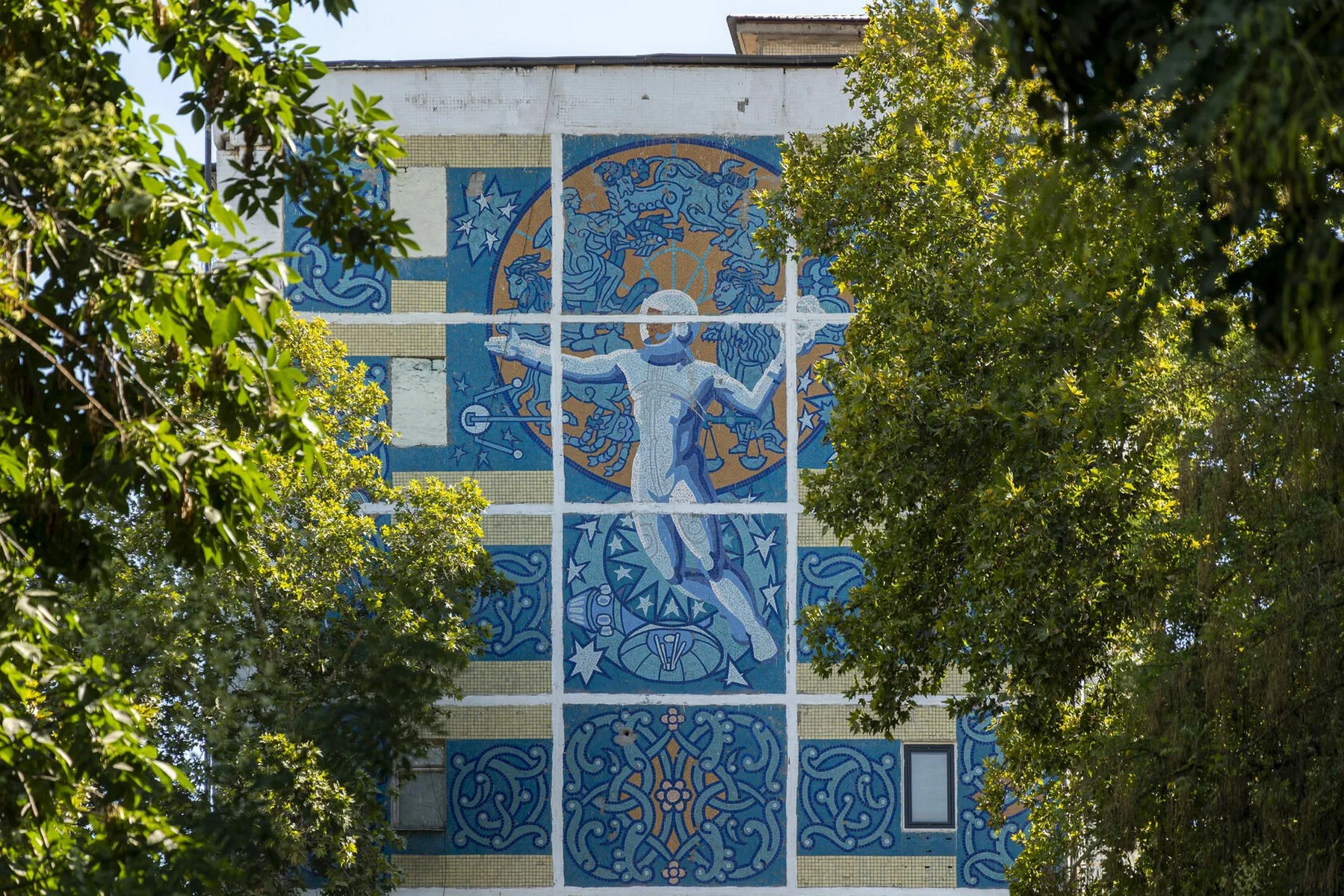
Across Tashkent, large mosaics decorate the blank end walls of apartment blocks. Some depict historical figures or scenes from everyday life. Others feature stylized plants, abstract patterns, scientific achievements or images connected with the Soviet space programme.
The official Tashkent Mosaics project documents hundreds of surviving works, including panels created between the 1960s and 1980s, alongside examples that have already disappeared.
Imagine encountering one of these murals while walking to a neighbourhood café. You might see a woman surrounded by flowers, a worker harvesting cotton, or a composition of geometric forms that seems to stretch across the entire building.
The artwork may be several storeys high, yet the street below continues its ordinary routine. Residents enter their apartments, children play nearby, and cars squeeze into the spaces between buildings.
That contrast is part of the appeal. Unlike a museum object, a residential mosaic remains embedded in the life of the city. It was created for people to encounter every day, whether they stopped to admire it or not. And because many of these works are not signposted, finding them feels less like visiting an attraction and more like making your own discoveries.
If there is one place to begin exploring this artistic world, it is Kosmonavtlar metro station.
The station’s deep blue and turquoise tones, ceramic decoration and portraits of figures associated with space exploration create an atmosphere unlike that of an ordinary underground railway.
Here, the Soviet fascination with space becomes public art. The station celebrates the ambition of an era when space travel symbolized scientific progress, technological achievement and the promise of the future. Yet its decorative treatment gives the subject a distinctly theatrical quality.
The result is somewhere between a transport station, an architectural experiment and an underground gallery. It is also a useful reminder that the metro is one of the easiest ways to explore Tashkent’s twentieth-century architecture. Different stations have different visual identities, with their own materials, colours and decorative themes.
For travellers accustomed to treating the metro as a means of getting from one attraction to another, this is a welcome change of perspective. In Tashkent, the journey underground can itself become part of the sightseeing.
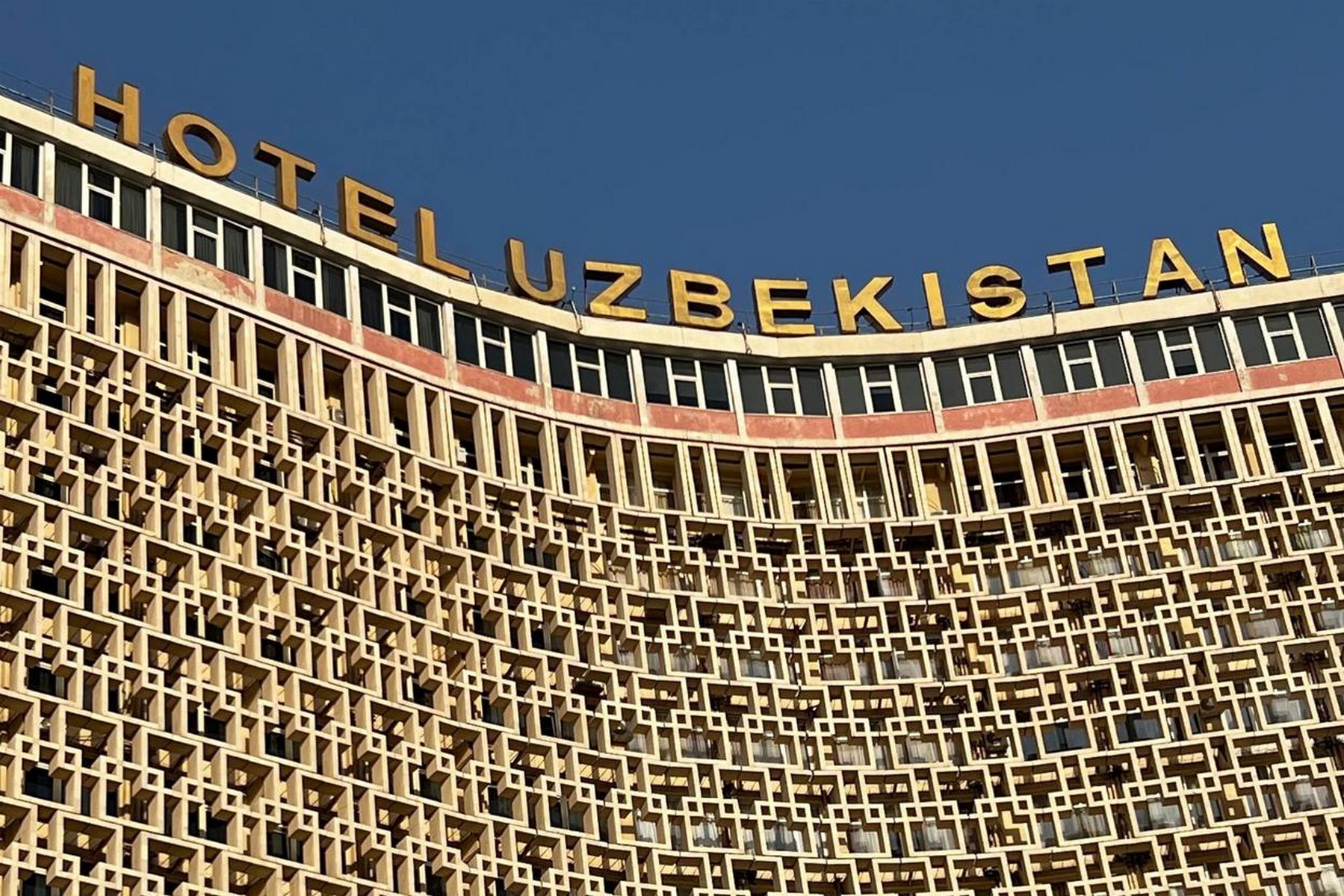
Few buildings illustrate Tashkent’s architectural identity as clearly as Hotel Uzbekistan.
Completed in 1974, the seventeen-storey hotel stands near Amir Timur Square. Its gently curved façade and distinctive concrete screen give it a monumental appearance, while the repeating geometric pattern recalls the decorative latticework found in traditional Central Asian architecture.
Look at it from across the square, and the hotel appears almost abstract: a great curved urface punctuated by an intricate pattern. Move closer, and the individual elements become more apparent.
Hotel Uzbekistan also carries a layer of history beyond its architecture. During the Soviet period, it served as an important accommodation centre for foreign visitors, reflecting Tashkent’s role as a gateway between the Soviet Union and the wider world. Today, it remains one of the capital’s most recognizable buildings, even as its meaning has changed with the country around it.

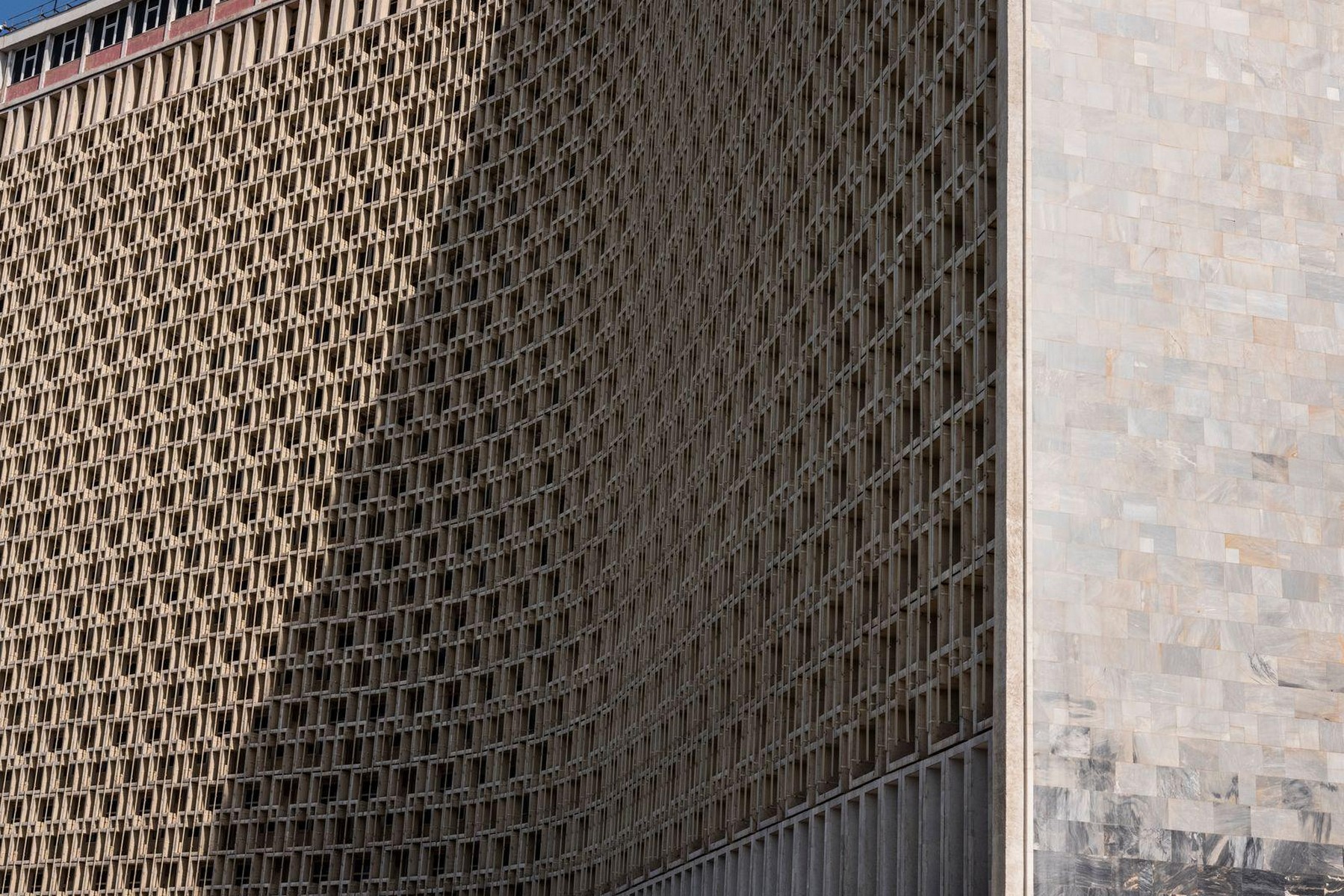

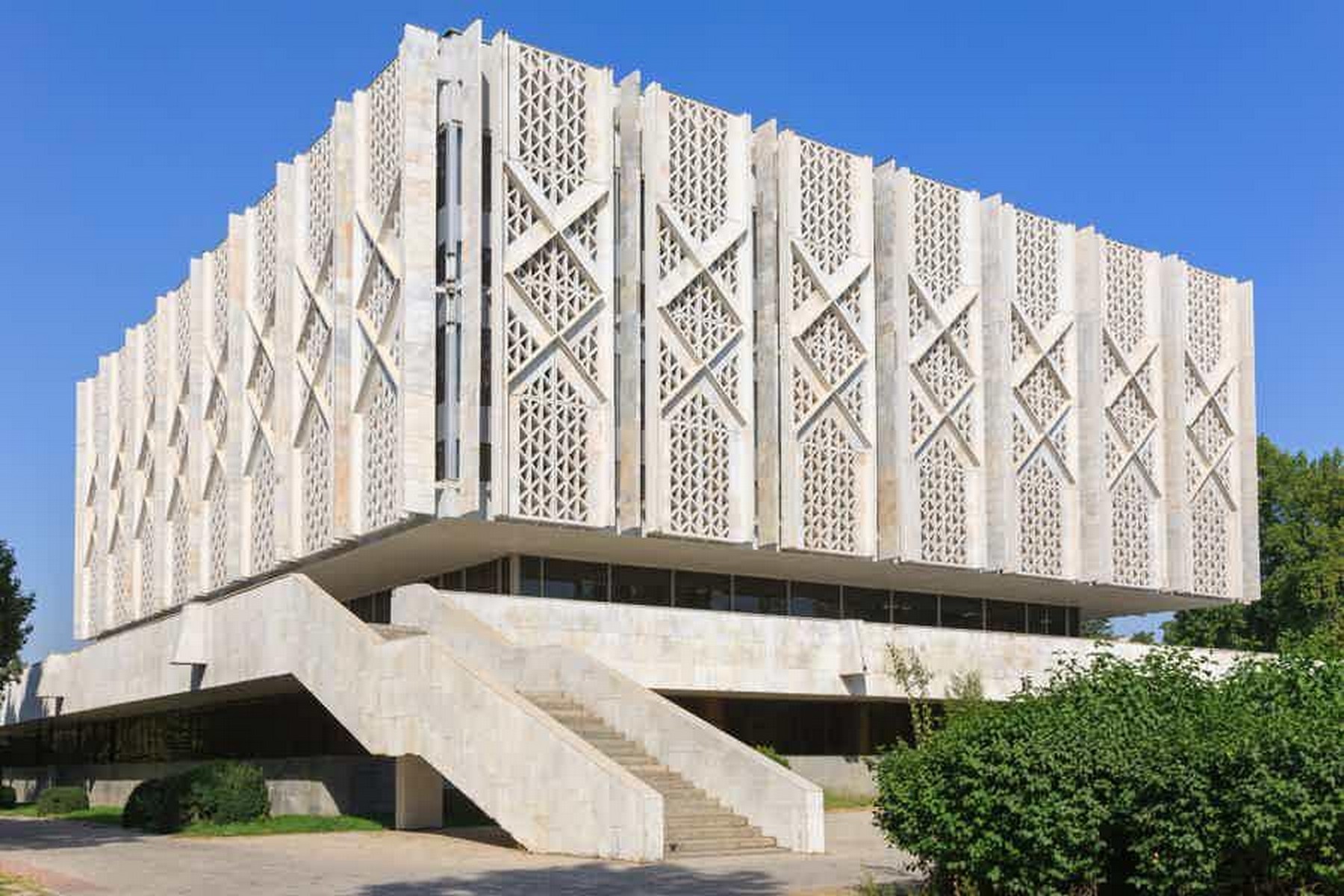
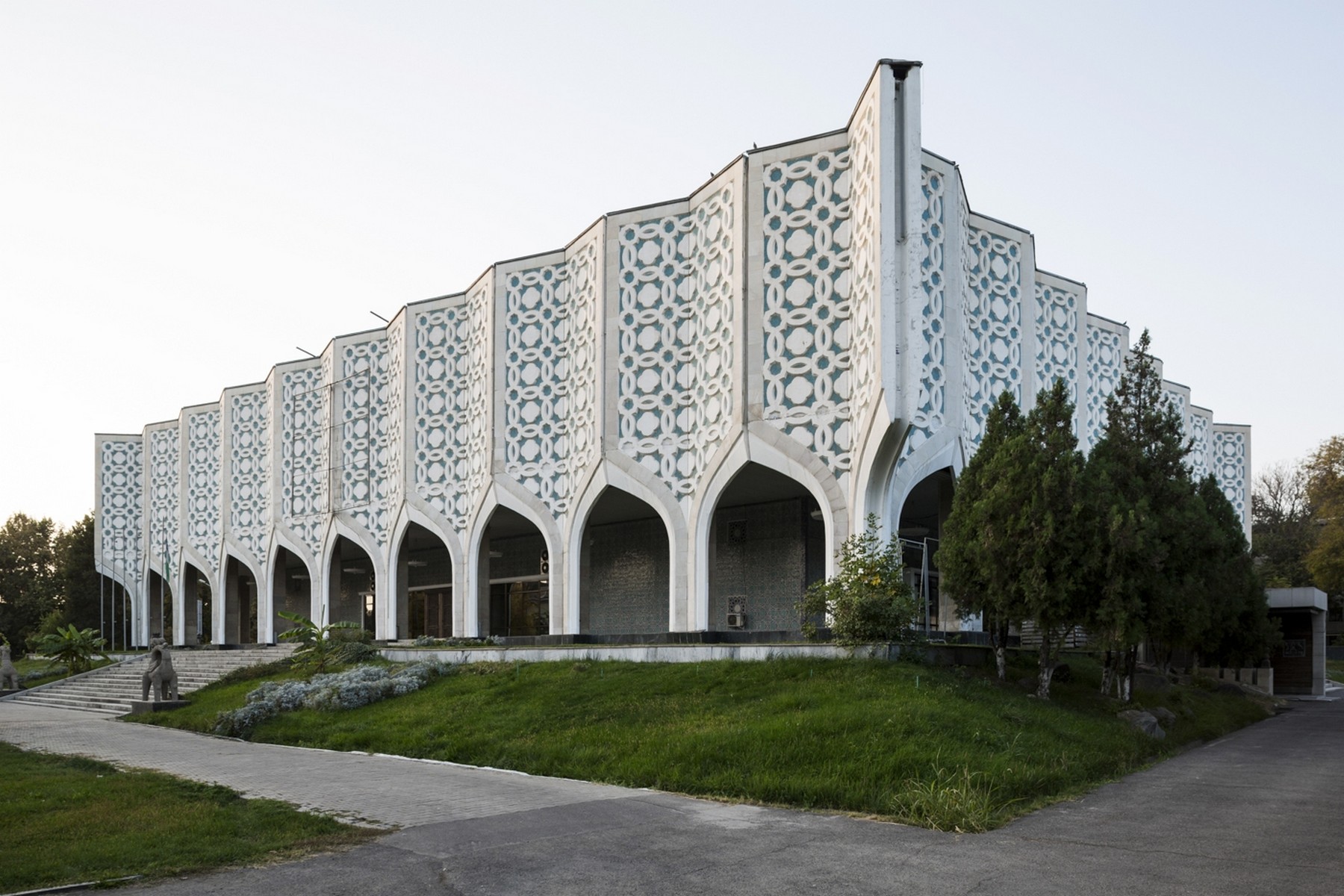
One of the most rewarding things about exploring Tashkent is learning to recognize the dialogue between architectural styles. Look closely at a modernist façade, and you may notice patterns that recall the geometry of historic madrasas. A decorative screen may bring to mind the wooden latticework of traditional houses. A mosaic might use floral forms associated with textiles, ceramics or manuscript illustration.
These are not always direct reproductions of historical designs. Often, they are reinterpretations — familiar visual ideas expressed through modern materials and a different architectural vocabulary.
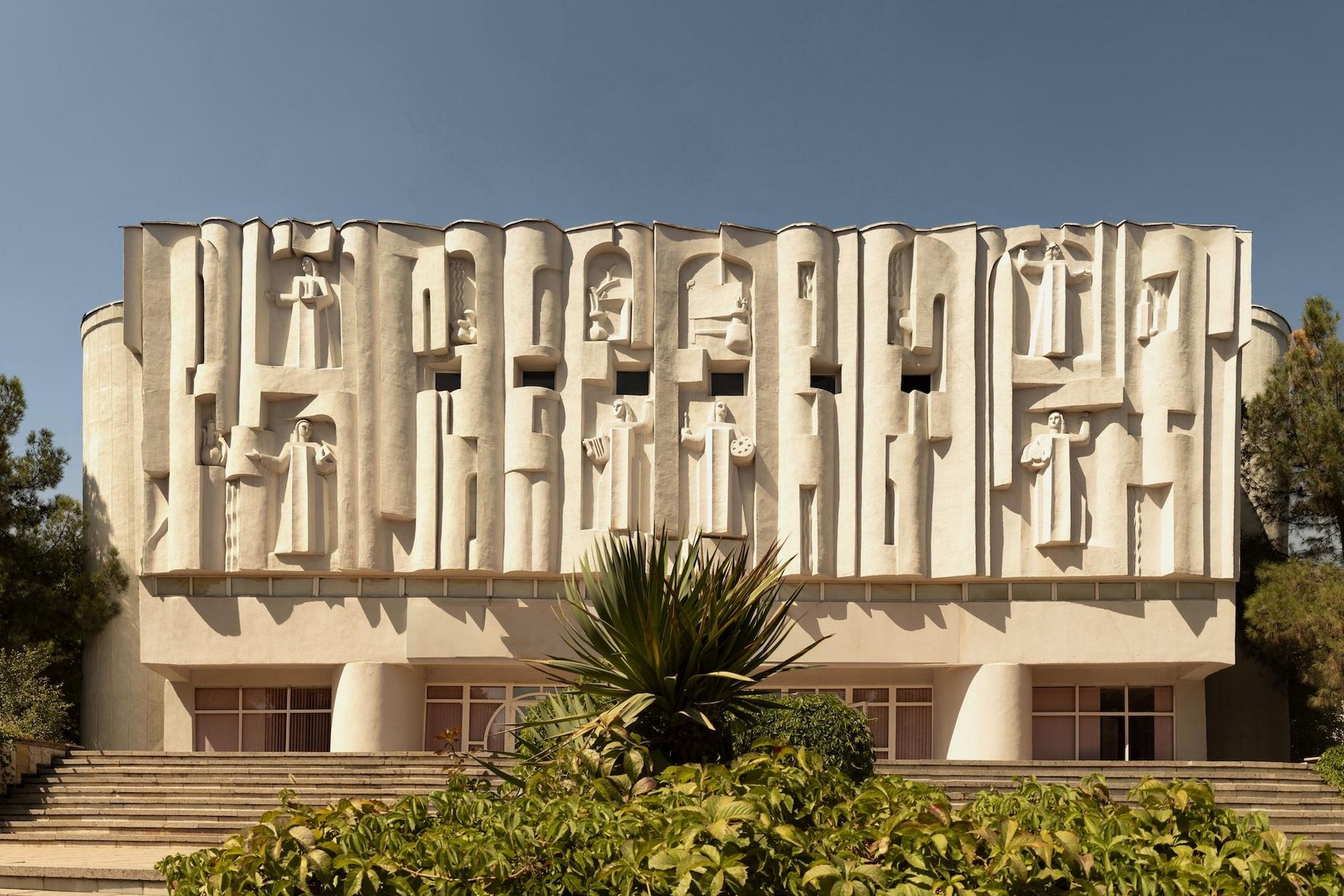
The Central Exhibition Hall of the Academy of Arts is one example of a modernist building whose façade incorporates references to regional Islamic architecture. This is where Tashkent becomes especially interesting for travellers who have already explored Samarkand, Bukhara and Khiva.
In the historic cities, traditional ornament is often encountered within established architectural forms: domes, portals, courtyards and tiled façades. In Tashkent, related decorative ideas can appear in unexpected places — on concrete screens, public buildings, apartment blocks and underground stations. The visual language has changed, but the conversation with the past continues.
You don’t need to devote an entire holiday to architectural history to appreciate this side of the city. Even a few hours can change the way you see Tashkent.
Here are a few ways to begin.
– Start at Kosmonavtlar metro station. Give yourself time to study the ceramic decoration and the portraits rather than simply passing through on your way elsewhere.
– Walk around Hotel Uzbekistan and Amir Timur Square. Observe the hotel’s façade from different angles and notice how the building relates to the surrounding open space.
– Explore the Blue Domes area. This park and its surroundings offer another perspective on the capital’s mid-twentieth-century urban design. The area is included in Tashkent’s official modernist architecture route.
– Look for residential mosaics. The official Tashkent Mosaics project documents the city’s monumental art and can help you discover works beyond the main tourist areas.
– Take a different route through the city. Instead of using a taxi for every short journey, walk between nearby streets and keep your eyes on the buildings. Some of the most interesting discoveries are on walls you would otherwise pass without noticing.
A few practical considerations will make the experience more rewarding. Remember that many mosaics are on private residential buildings: admire and photograph them respectfully, avoid blocking entrances, and don’t enter residential courtyards without permission. If you want to photograph a panel closely, be mindful of the people who live there.
And don’t feel that you have to find every artwork. The pleasure is in discovering a visual detail you weren’t expecting.