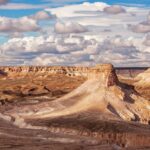
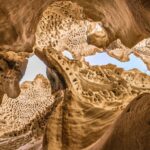
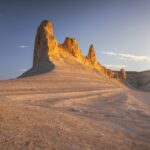
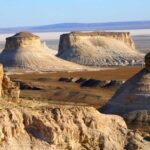
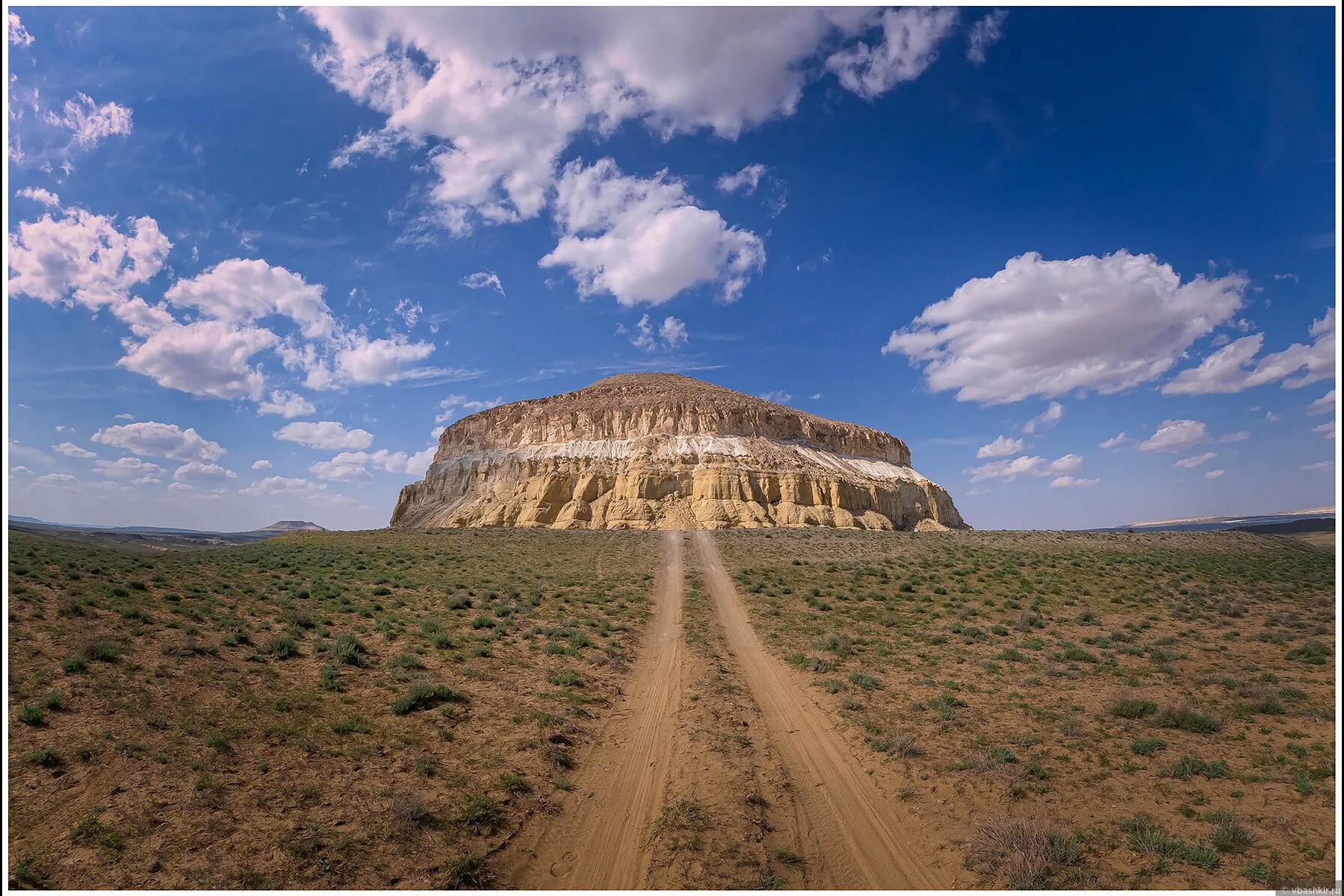
Mangystau, in the far west of Kazakhstan on the shores of the Caspian Sea, is one of Central Asia’s most extraordinary and least explored destinations. Vast deserts, dramatic limestone cliffs, underground mosques, ancient caravan routes and surreal rock formations create a landscape that often seems more like another planet than part of Kazakhstan.
The region is particularly appealing to travellers looking for something beyond the classic Central Asian itinerary. While cities such as Almaty, Astana, Samarkand and Bukhara are known for their architecture and history, Mangystau offers a completely different experience: remote wilderness, geological formations and a sense of adventure.
The defining feature of Mangystau is its geology. Millions of years of erosion have carved the region’s soft limestone and sedimentary rocks into cliffs, canyons, isolated mountains and bizarre formations.
The most famous landscape is Bozzhyra, a spectacular area of white cliffs and rock formations on the Ustyurt Plateau. Its enormous escarpments, sharp ridges and isolated peaks are among the most recognisable natural landmarks in Kazakhstan. At sunrise and sunset, the changing light transforms the pale rocks from white and grey to shades of gold and pink.
Bozzhyra is best explored by 4WD, as many of the most impressive viewpoints are far from paved roads.
Another remarkable destination is Tuzbair, a vast salt flat surrounded by dramatic cliffs and desert. After rainfall, shallow water can cover parts of the salt surface, creating extraordinary reflections of the sky. In dry conditions, the landscape becomes a seemingly endless expanse of white salt surrounded by the barren Mangystau desert.


Near the town of Shetpe rises Mount Sherkala, one of Mangystau’s most distinctive landmarks. The isolated mountain has an unusual shape and has been associated with numerous legends. From different directions, its appearance changes dramatically, which has contributed to its reputation as one of the region’s most mysterious natural monuments.
The surrounding area is also home to Airakty Valley, sometimes known as the Valley of Castles. Eroded rock formations resemble towers, fortresses and ruined castles scattered across the desert. Walking among these formations provides an opportunity to appreciate the geological history of Mangystau at close range.
Mangystau is not only about dramatic scenery. The region has a rich spiritual and cultural heritage, particularly associated with Sufi traditions and sacred underground mosques.
Among the best known is Beket-Ata Underground Mosque, carved into the limestone rock. It is an important pilgrimage site and one of the most significant religious monuments in western Kazakhstan. Reaching the mosque involves travelling through a remote desert landscape, making the journey itself part of the experience.
Other sacred sites include Shakpak-Ata Mosque, an unusual rock-cut religious complex dating back many centuries. Its architecture and location provide a fascinating insight into the religious traditions that developed along the ancient routes of the Mangystau Peninsula.


The regional capital, Aktau, is located on the eastern shore of the Caspian Sea. Unlike the remote desert landscapes farther inland, Aktau is a modern coastal city with a relaxed atmosphere and a long waterfront.
The city is normally the starting point for exploring Mangystau. Travellers can use Aktau as their base before heading into the desert on multi-day 4WD excursions.
Aktau itself is also worth exploring, particularly the Caspian waterfront, local markets and restaurants. The city provides an interesting contrast to the wilderness surrounding it.
For travellers arriving late or departing early, the region also has practical transport connections. A night-time public bus service connects Aktau with Mangystau railway station, making it easier to combine rail travel with a visit to the region.
Mangystau is not a destination for travellers looking for luxury infrastructure at every stage of their journey. Many of the region’s most spectacular locations are remote, and roads can be rough or completely unpaved.
A typical Mangystau adventure therefore involves 4WD vehicles, long drives, desert camps or simple guesthouses and relatively limited facilities. Distances are considerable, and weather conditions can change quickly.
This is precisely what makes the region so attractive to adventurous travellers. A journey through Mangystau feels less like a conventional sightseeing tour and more like an expedition into an almost untouched landscape.
The best time to travel is generally during spring and autumn, when temperatures are more comfortable for long days of driving and outdoor exploration. Summer can be extremely hot, while winter brings cold temperatures and potentially difficult road conditions.
A meaningful exploration of Mangystau generally requires at least 3–4 days, while 5–7 days allows for a much more comprehensive experience.
A typical itinerary might include:
Aktau → Bozzhyra → Tuzbair → Sherkala → Airakty Valley → underground mosques → Aktau
The exact route depends on road conditions, the season and the places travellers most want to see.
Mangystau can also be incorporated into a broader Kazakhstan itinerary. For example, travellers can combine several days in Mangystau with Almaty, Charyn Canyon and Turkestan, creating a journey that combines Kazakhstan’s major cultural attractions with some of its most spectacular natural landscapes.
Mangystau is ideal for travellers who want to experience a side of Kazakhstan that is very different from its modern cities and more familiar tourist destinations.
Its appeal lies in the combination of:
Mangystau is still relatively unknown internationally, which makes it particularly rewarding for experienced travellers. There are no crowds at many of its most spectacular viewpoints, and the enormous scale of the landscape creates a feeling of genuine wilderness.
For those willing to travel beyond the usual tourist routes, Mangystau is one of the great hidden landscapes of Central Asia — a place where desert, history and geology come together to create an unforgettable journey.