Some of the most unforgettable places in Central Asia and the Caucasus aren’t marked on any map. They appear unexpectedly between two destinations, somewhere along a mountain road, at a roadside market or beside a small café that wasn’t part of the original plan.
Modern travel has made us remarkably efficient. We know exactly where we’re going long before we leave home. We save locations on our phones, create detailed itineraries, read reviews, calculate driving times and download offline maps. By the time we finally arrive, we’ve often spent months planning every hour of the journey.
And yet, some of the strongest travel memories are created precisely when those carefully designed plans begin to fall apart. A missed turn. An unexpected stop. A conversation with a stranger. A place that wasn’t supposed to be part of the itinerary.
Central Asia and the Caucasus seem particularly good at rewarding travelers who leave room for spontaneity.
Take the mountain roads of Azerbaijan. Many visitors drive from Baku to Khinalig with a single goal: reaching one of the highest and most isolated villages in the Caucasus. The destination is extraordinary.
But ask travelers about their memories afterward, and surprisingly few begin by describing the village itself. Instead, they remember the drive.
They remember stopping beside a shepherd leading hundreds of sheep across the road. They remember buying fresh fruit from a roadside stall outside Quba. They remember pulling over at a viewpoint because the changing light had transformed the mountains into something entirely different from what they had seen thirty minutes earlier.
The village becomes the headline. The journey becomes the story.


Something similar happens in Kazakhstan. Visitors travel to Altyn-Emel National Park to see the famous Singing Dune or the spectacular white and red landscapes of the Aktau Mountains.
Yet many leave talking about something completely different. The silence. The endless steppe. The strange feeling of driving for an hour without seeing another vehicle.
In a world where almost every landscape has become instantly accessible, there is something profoundly satisfying about traveling through a place that still feels genuinely vast.
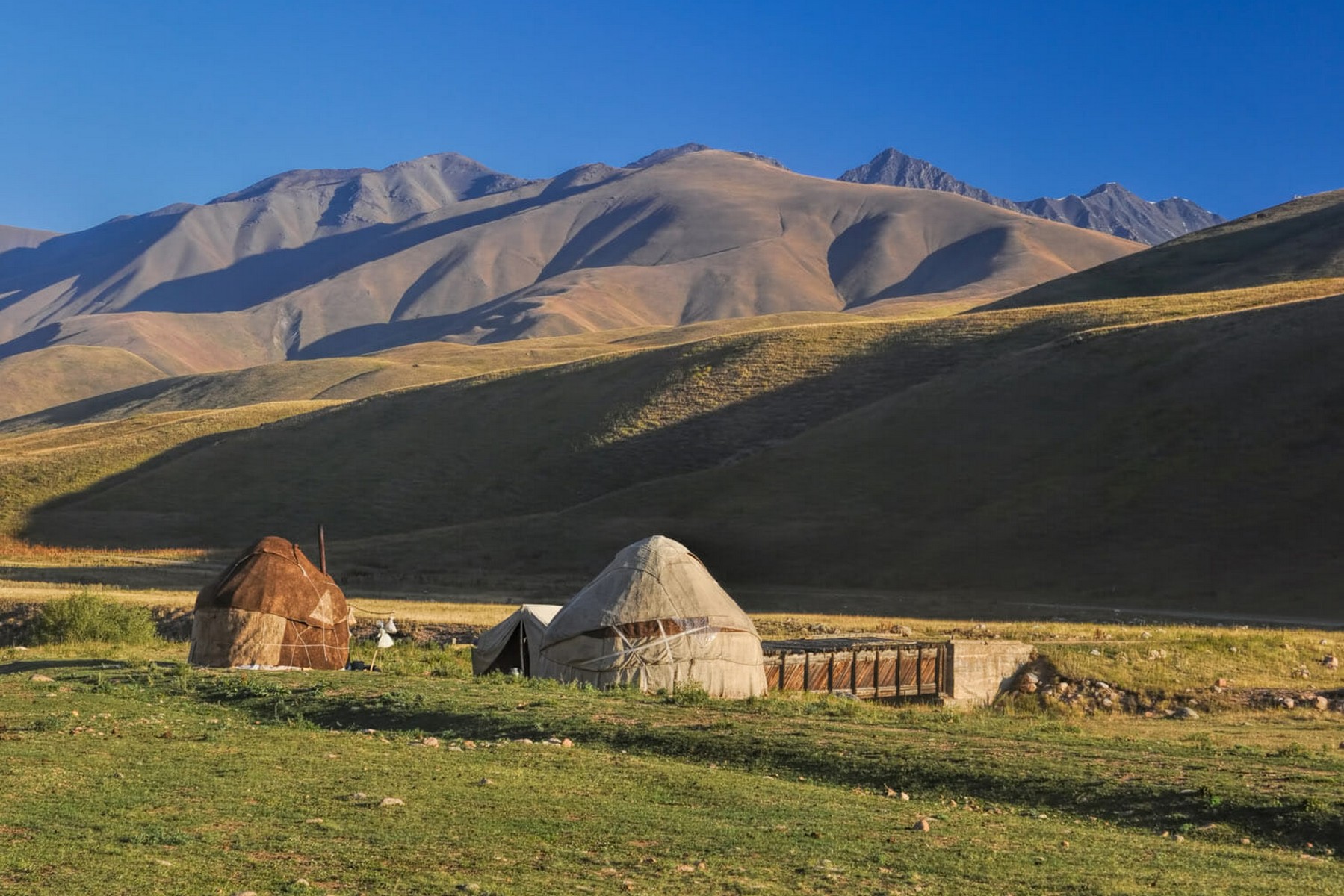
In Kyrgyzstan, roads are measured differently. Distances may seem short on a map, but mountain passes rewrite the mathematics of travel. A route that appears to require only a few hours can easily become an entire day. Fortunately, nobody seems particularly concerned about that. A roadside yurt appears. Someone invites you inside for tea. Fresh bread arrives. Then fermented mare’s milk.
Then another cup of tea. And suddenly, the schedule that once seemed so important quietly disappears. Perhaps nowhere is this more obvious than along the Pamir Highway in Tajikistan.
People often speak about the route as if it were a single attraction. It isn’t. The road itself is the experience.
Villages appear unexpectedly along the banks of the Panj River. Children wave as vehicles pass. Elderly men sit beneath trees discussing village news while watching one of the world’s most famous mountain roads unfold in front of them.
Travelers begin the journey searching for dramatic landscapes. They often finish it remembering the people they met along the way.


Even Uzbekistan, famous for its historic cities, rewards those who resist the temptation to move too quickly. The direct route from Samarkand to Bukhara is efficient. The slower route is far more interesting.
Small markets appear beside the highway selling melons stacked into impossible pyramids. Family-owned cafés advertise plov prepared according to local recipes. Villages hidden just a few kilometers from the main road continue producing ceramics, silk and embroidery using techniques that have survived for centuries.
Unfortunately, modern tourism sometimes encourages exactly the opposite behavior. See more. Drive farther. Add another destination. Collect another photograph. There is an unspoken assumption that a successful trip requires constant movement.
The countries of Central Asia and the Caucasus challenge that philosophy. They reward curiosity more than efficiency. Perhaps that’s why the most experienced travelers eventually learn to build flexibility into their itineraries. They allow extra time. They stop more often. They become comfortable with detours. They understand that arriving an hour later rarely matters.
Ironically, the destinations we spend weeks researching are often the easiest parts of a journey to remember. The unexpected moments require no research at all. A cup of tea in a mountain village. A conversation in a local market. A sunset viewed from an unmarked roadside viewpoint. A meal shared with people whose names you never learn. Years later, those are the memories that remain. Not because they were spectacular. But because they were unplanned.
Travel guides teach us where to go. Experience teaches us when to slow down. And sometimes, the most remarkable places are the ones we never intended to visit in the first place.