Uzbekistan is one of those countries where the classic itinerary seems almost designed for the railway.
Take the fast train from Tashkent to Samarkand. Continue to Bukhara. Fly towards Khiva. Walk through the historic centres, take photographs of the blue-tiled monuments, and move on.
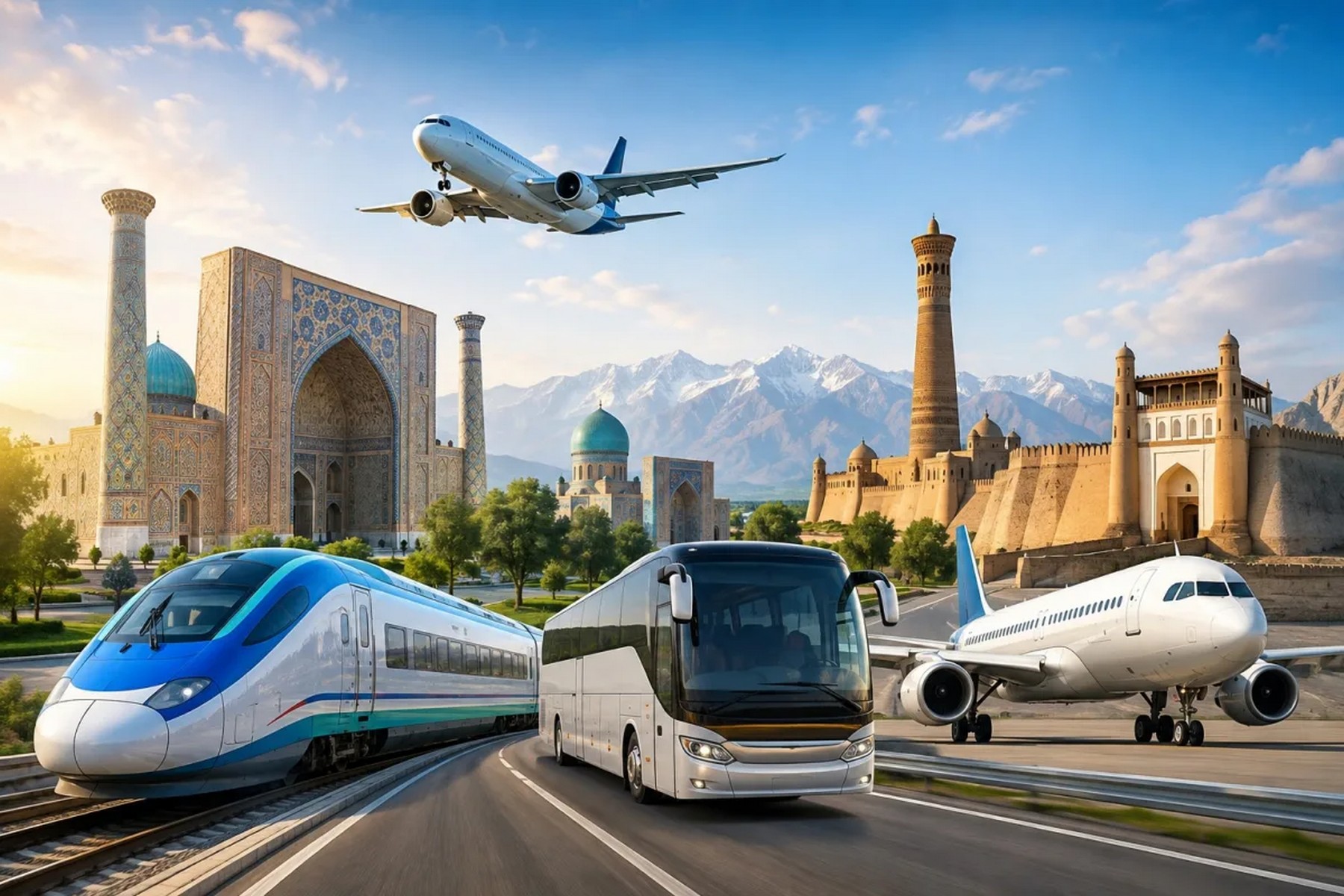
It works. In fact, for a first visit focused mainly on the great Silk Road cities, it can work extremely well. Official tourism itineraries themselves frequently combine the Afrosiyob high-speed train with road transfers; one current itinerary, for example, puts Tashkent–Samarkand and Samarkand–Tashkent on the Afrosiyob while using cars for excursions outside the cities.
But there is another Uzbekistan waiting between those railway stations. It is the Uzbekistan of mountain roads, village markets, roadside teahouses, ancient caravanserais, desert landscapes, forgotten archaeological sites and small towns that rarely appear in a standard itinerary.
For that Uzbekistan, a car changes the journey. The question is not simply “Can I drive around Uzbekistan?” It is: “What kind of Uzbekistan do I want to see?”
Uzbekistan is not enormous by Central Asian standards, but distances become significant once you start exploring beyond the main cities. The classic route itself illustrates the point.
Tashkent to Samarkand is straightforward. Samarkand to Bukhara is about 280 km, while Bukhara to Khiva is roughly 480 km and can take seven to eight hours by road. Current tourism itineraries specifically warn that parts of the Bukhara–Khiva road may be under renovation.
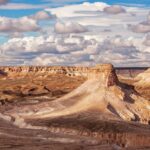
That last journey is particularly revealing. On a train or plane, the distance is something to be crossed. In a car, it becomes part of the experience. The landscape changes gradually. The cultivated land gives way to increasingly dry country. Settlements become less frequent. The horizon opens. Eventually, you are travelling through the Kyzylkum landscape towards Khorezm.
This is the difference between travelling across Uzbekistan and simply moving between Uzbek cities. If your plan is simply: Tashkent → Samarkand → Bukhara → Khiva then a rental car is not necessarily the obvious choice.
You will spend substantial amounts of time driving between places where trains can be faster and more convenient. Once you arrive in the historic centres, you will often leave the car parked anyway.
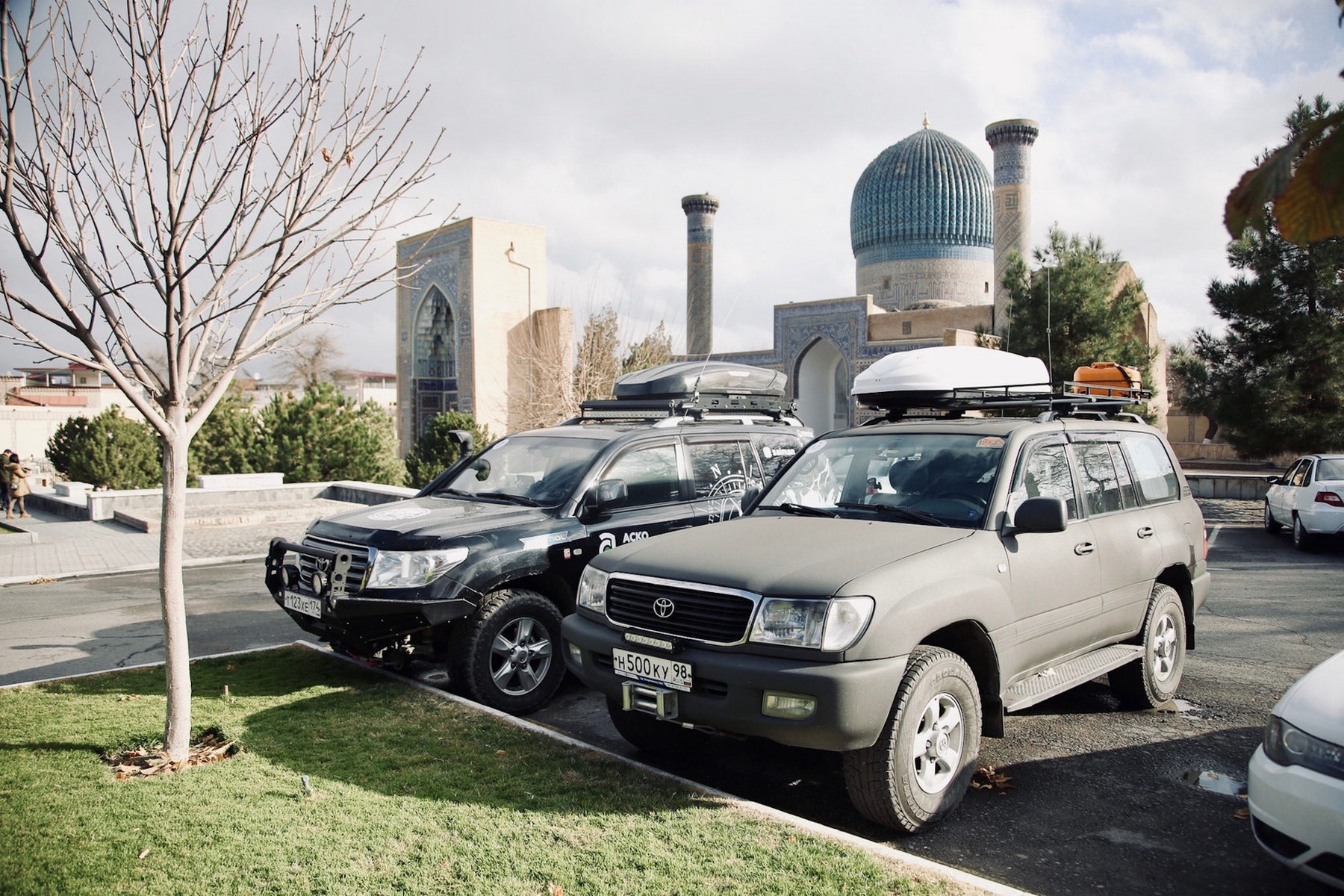
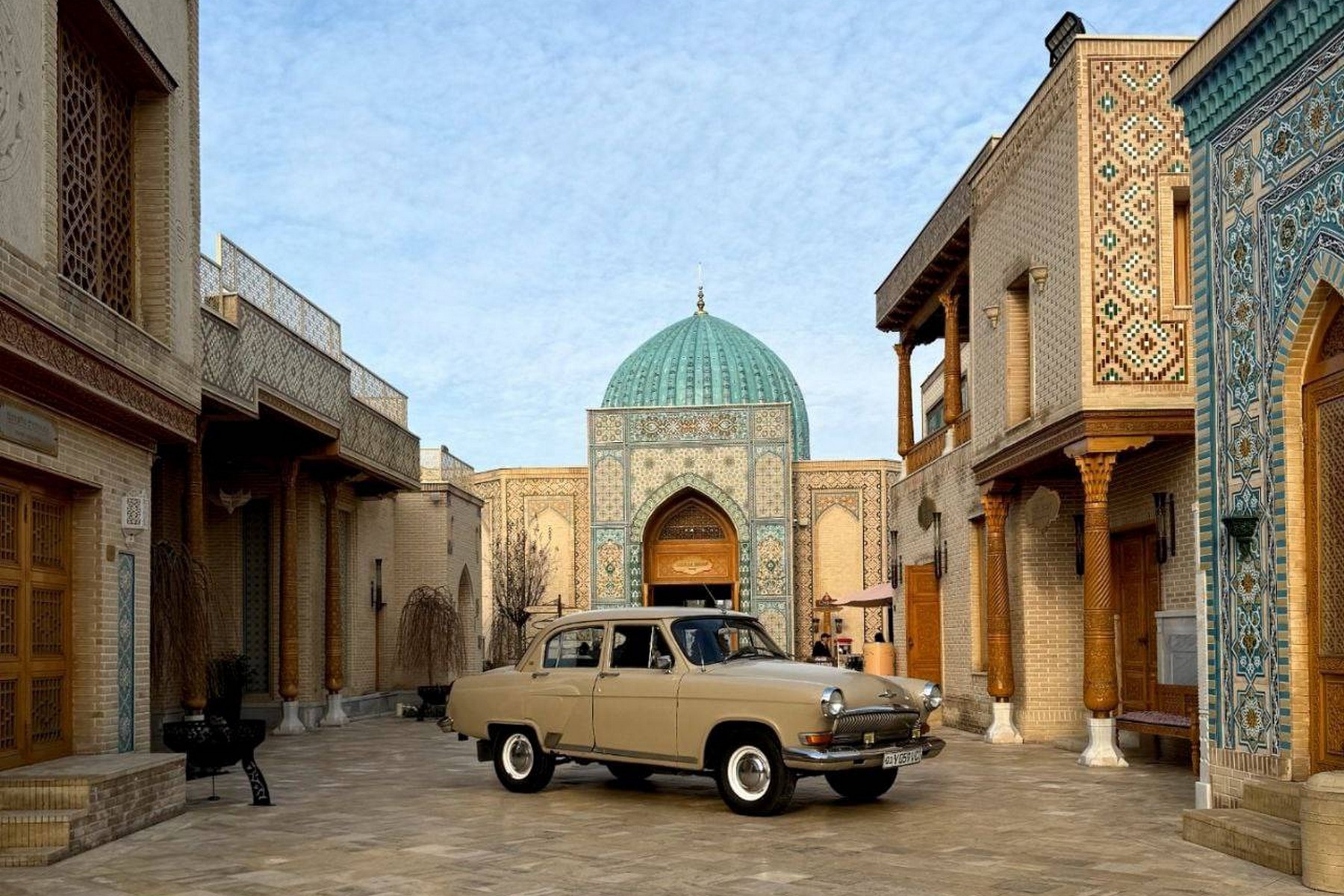
Bukhara, for example, has designated car-free areas in its historic centre. In Samarkand, the road connecting Registan Square with Shah-i-Zinda is also a car-free zone, as is a road in the Konigil tourist area.
The car becomes much more interesting when you change the question. Instead of asking: “How can I get from one famous city to another?” ask: “What can I see between them?” That is where self-driving starts to make sense.
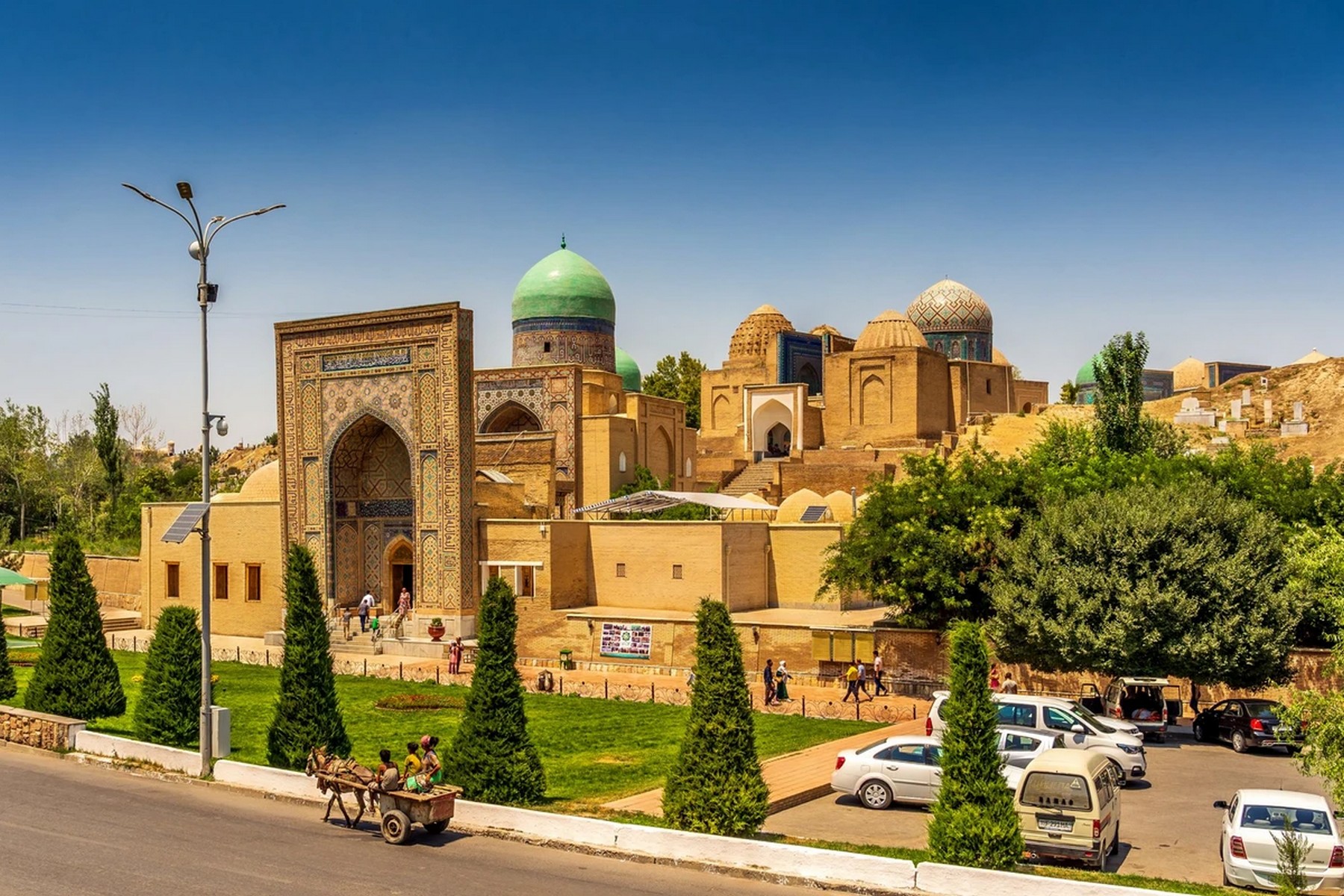
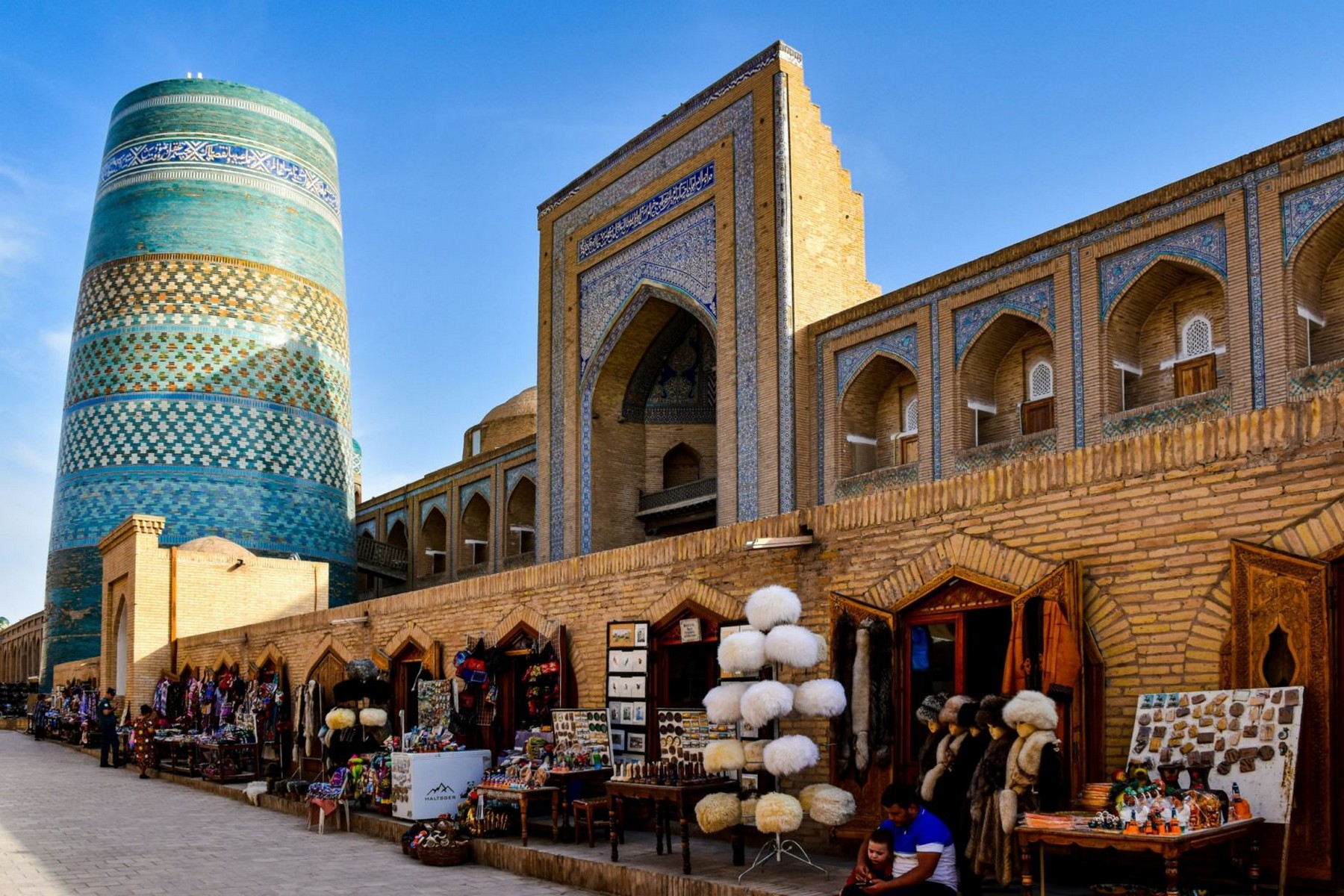
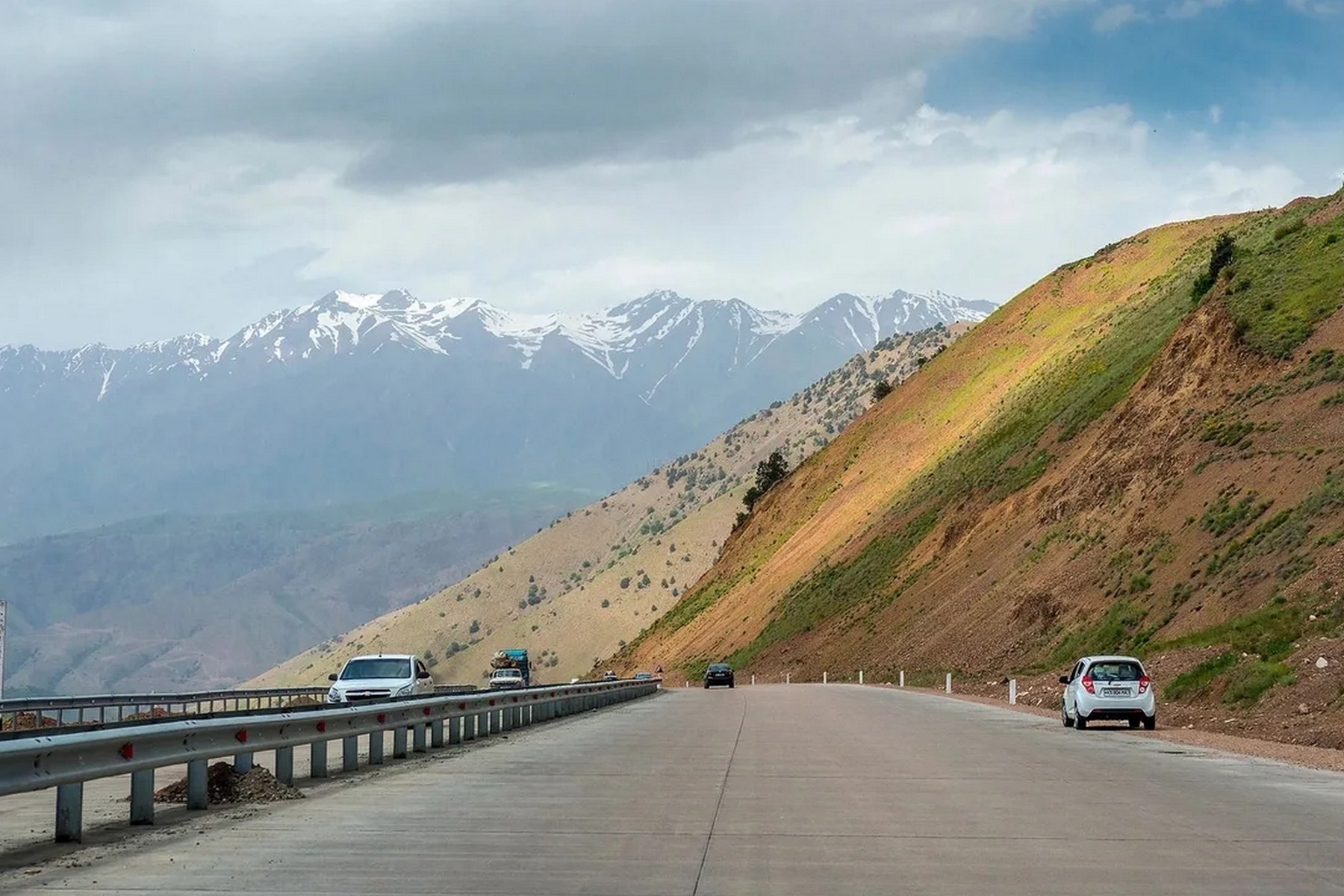
One of the pleasures of driving through Uzbekistan is discovering how closely modern roads sometimes follow much older geographical logic.
The Great Uzbek Tract, for example, connects Tashkent and Termez over about 708 km, passing through Gulistan, Jizzakh, Samarkand and Karshi. Uzbekistan’s tourism authority describes it as following the route of an ancient road that once connected regions as far afield as India, Bactria, Sogdiana and Persia.
You do not need to imagine yourself literally following the Silk Road. You are travelling through landscapes that have been corridors of movement for centuries. That makes roadside stops unexpectedly interesting.
A ruined caravanserai. A small settlement. An old shrine. A roadside market. A patch of mulberry trees. A village where somebody is selling bread beside the road. These are not necessarily attractions in the conventional sense. They are clues.
The country’s official tourism portal now lists numerous regional and thematic routes covering places beyond the standard circuit, including archaeological sites, villages, mountain areas, pilgrimage destinations, caves, ancient settlements and remote corners of Karakalpakstan.
That is significant because Uzbekistan’s most interesting places are not always concentrated around its headline monuments. Consider the regions around Samarkand.
You can drive out to Konigil, where traditional Samarkand paper is still made from mulberry. You can continue towards rural settlements, archaeological landscapes and mountain areas rather than returning immediately to the city. Current tourism itineraries already combine Konigil with the major Samarkand sights.
Or take the road beyond Bukhara. Instead of treating the city as the end of the journey, use it as a starting point for exploring the surrounding oasis, old estates, pilgrimage sites and smaller settlements. The same principle applies in almost every region. The further you move away from the famous monument, the more important the journey itself becomes.
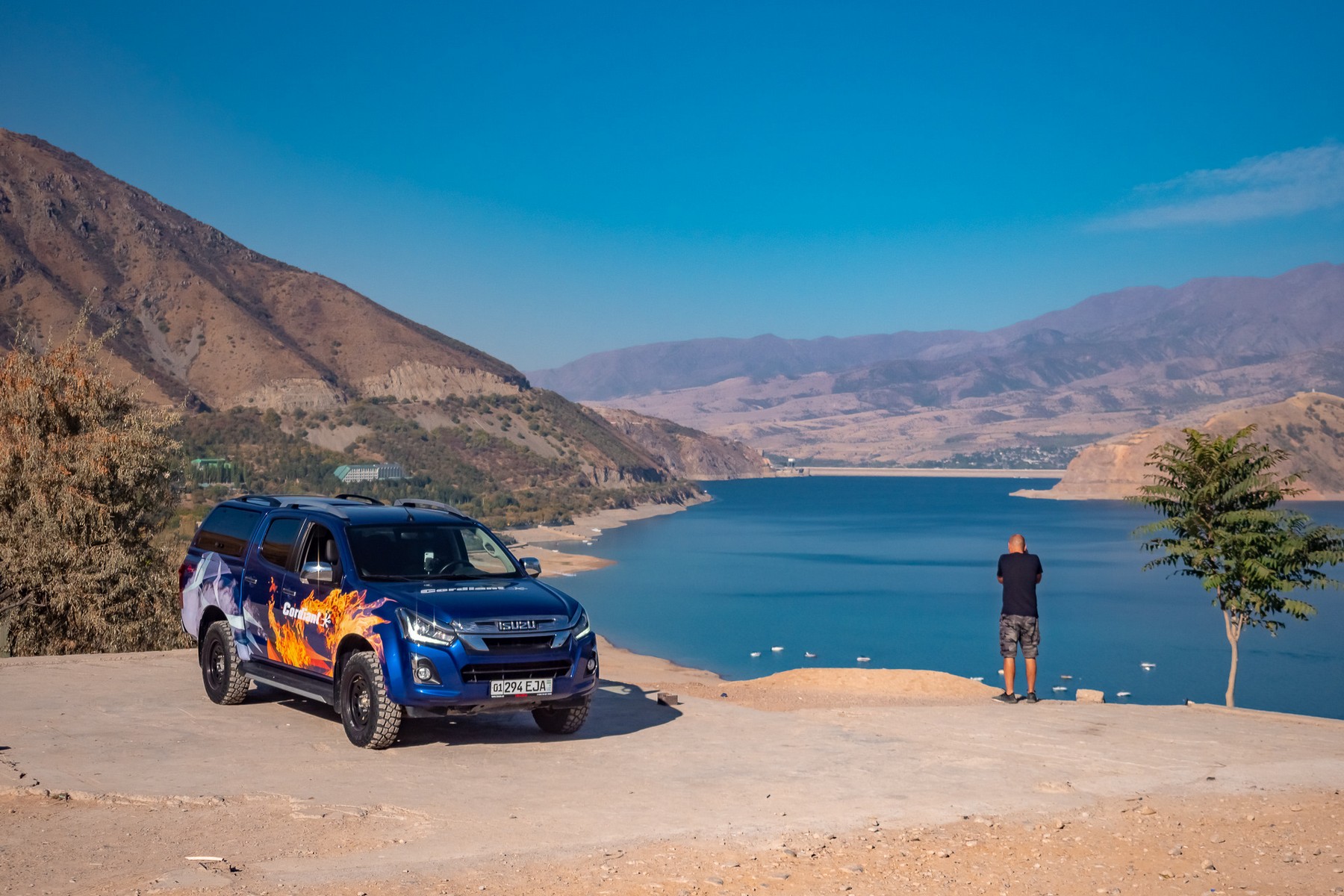
Uzbekistan is not usually the first country people associate with mountain travel. That is part of the attraction. The country contains mountain landscapes in several regions, including the Tashkent area and the ranges around Jizzakh, Kashkadarya and Surkhandarya.
A car gives you the possibility of combining cultural travel with landscapes that would otherwise require separate excursions. One morning you can be looking at medieval architecture. By afternoon, you can be climbing towards a mountain village.
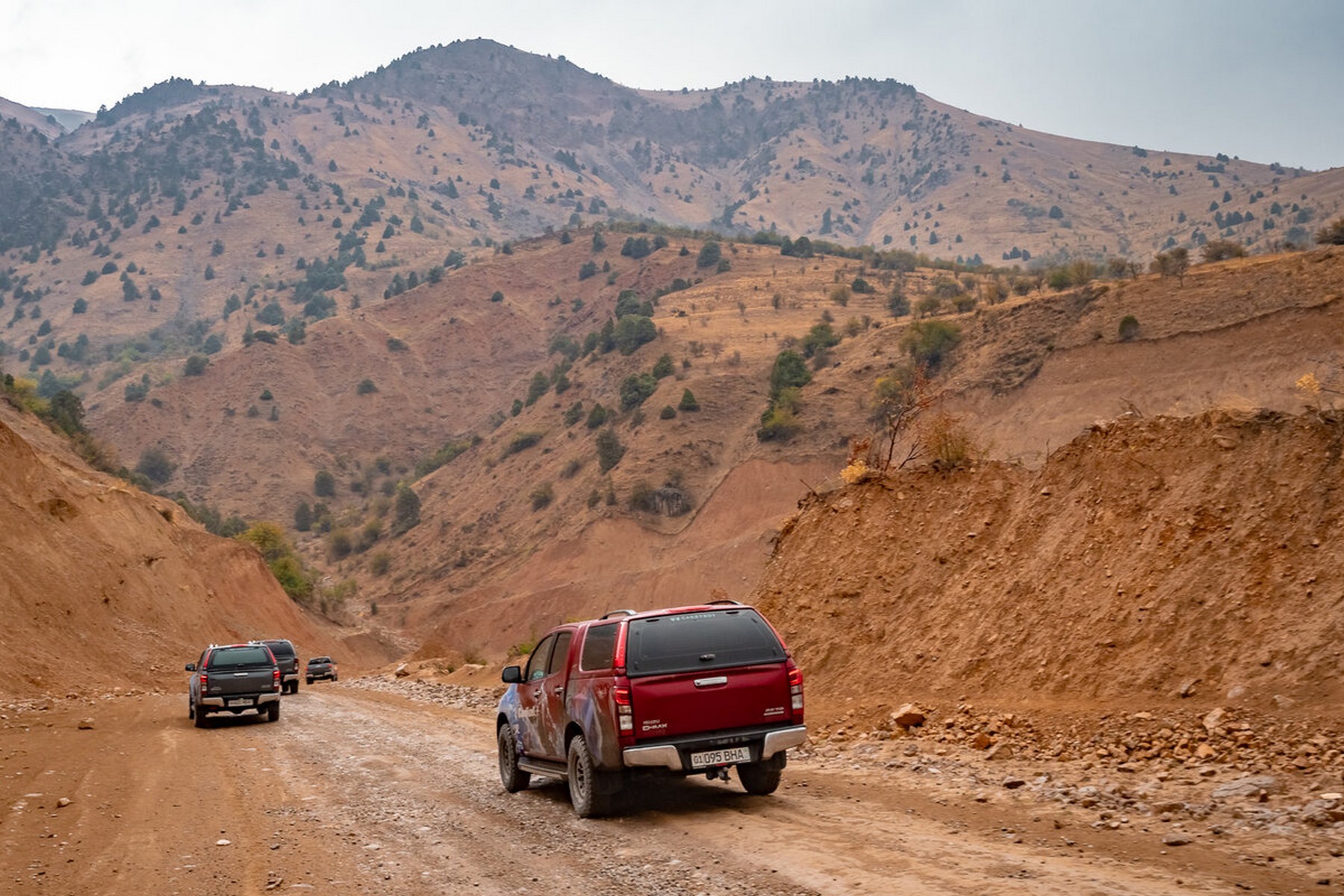
But driving in Uzbekistan is not European road-tripping. This is where romantic ideas about an Uzbek road trip need to meet reality. Road conditions vary significantly. Major highways are often well maintained, while secondary and rural roads can be bumpy or in poor condition. It also warns that rural roads are generally not illuminated at night, fuel availability can be sporadic outside Tashkent, and livestock, agricultural machinery and animal-drawn carts can appear on roads.
Traffic can also be unfamiliar to visitors. Drivers may ignore lane markings or traffic signals, and pedestrians can cross unexpectedly. This does not mean that a self-drive holiday is impossible. It means that you should approach it as Central Asian road travel, not as a leisurely European motorway holiday.
Another difference from Western European road travel is fuel planning. Gasoline supplies can be sporadic outside Tashkent. That does not mean every rural journey involves a fuel crisis. It means you should not treat the next petrol station as an assumption. When leaving a major city, particularly for a remote region, fill the tank. If your route takes you into sparsely populated territory, don’t wait until the fuel gauge is almost empty. A little planning here can prevent a very inconvenient afternoon.
There is a temptation with self-driving to turn every day into a giant expedition. That is a mistake. Uzbekistan rewards stopping. Instead of trying to cover six hundred kilometres because you technically can, consider what happens if you cover three hundred and spend the afternoon somewhere unexpected. Stay in a smaller town. Visit a market. Have lunch in a roadside café. Walk around a village. Find a local bakery. Talk to somebody who asks where you’re from. The destination you never researched may become the memory you remember.
There is no rule saying you have to drive the entire country. In fact, one of the most practical approaches can be a hybrid journey. Use the fast train for the major urban connections. Then rent a car for the regions where flexibility matters. For example: Tashkent → Samarkand by train. Explore Samarkand. Rent a car. Explore the surrounding region and continue towards Bukhara, perhaps taking time for smaller stops. Return the car in Bukhara. Continue by another mode of transport towards Khiva. Or reverse the idea depending on your itinerary. This gives you the best part of both systems.
The railway handles the long, predictable city-to-city journeys. The car handles the unpredictable ones.
This is ultimately why self-driving is interesting. Not because it is necessarily cheaper. Not because it is always faster. And certainly not because Uzbekistan’s roads are effortless. It is interesting because it changes what you notice. The train delivers you to Samarkand. The car lets you stop before Samarkand. The train gets you to Bukhara. The car lets you notice the landscape approaching it. A flight gets you towards Khorezm. The road lets you experience the gradual transition from oasis to desert. And somewhere between the destinations, Uzbekistan stops looking like a collection of UNESCO sites and starts looking like a country. That is the real reward.
By the end of the day, my hands were tired, my back ached, but my heart was full. I had not only witnessed a remarkable cultural practice but had also connected with the spirit of the Uzbek people. The cotton fields, with their rich history and vibrant community, had left an indelible mark on my journey.
If you find yourself in Uzbekistan during the harvest season, don’t miss the opportunity to step into the cotton fields. It’s a rare glimpse into a world where tradition and community thrive, and where every cotton boll carries the weight of history.