Just 13 kilometers from the center of Samarkand, along the banks of the ancient Siyab Canal, lies the remarkable tourist village of Konigil — a place where time seems to slow down and the rhythm of traditional Uzbek life comes alive. This is far more than a sightseeing stop; it is a sanctuary of heritage where visitors can immerse themselves in crafts, customs, and age-old ways of living that have shaped the culture of the region.
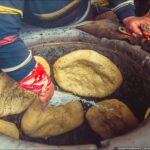
Wandering through the village, surrounded by old clay houses and peaceful courtyards, you catch a glimpse of how people once lived. Women sit by their looms embroidering delicate patterns, weaving carpets, or baking fragrant flatbread in clay tandoors. Nearby, you can watch the milling of grain in a water-powered mill or observe the pressing of natural oils in a traditional oil workshop.


Across Konigil, numerous artisan studios are open to visitors: woodcarving workshops, blacksmith forges, pottery studios, toy-making workshops, as well as ateliers where painters, weavers, and embroiderers continue ancient crafts. Guests are not only welcome to observe — they are encouraged to take part, learning the crafts firsthand from skilled masters.
Yet the true jewel of Konigil is its traditional Samarkand paper mill — a place where artisans breathe life back into an ancient craft nearly lost to time. Here, visitors can follow the entire process of papermaking: from cleaning the mulberry bark (the tree is known locally as tut or silk tree) to forming and drying the handmade sheets. The Mukhtarov family, renowned craftsmen of Samarkand, revived a centuries-old technology that predates modern papermaking machines by hundreds of years. Their paper is used not only for souvenirs but also for the restoration of ancient manuscripts.


In old times, papermaking in Samarkand was an intricate and labor-intensive craft requiring mastery and precision. Mulberry bark was prized for its durability and produced paper recognized far beyond the region. Artisans carefully selected the strongest fibers, crushed and treated them to remove impurities, then manually sorted them to ensure exceptional quality. The fibers were placed into wooden molds, pressed, and evenly distributed using special tools. After forming, each sheet was dried slowly on racks or frames to prevent warping, then polished, trimmed, and prepared for use. This paper was known for its strength, longevity, and ability to absorb ink beautifully — making it ideal for calligraphy and illustration.


A small boutique near the mill sells delightful souvenirs made from this handmade paper — dolls, notebooks, masks, wallets, and more.
Next, visitors can explore the pottery workshop — an introduction to one of Uzbekistan’s most cherished artistic traditions. Uzbek ceramics require patience, precision, and deep understanding. After shaping the clay, artisans leave the pieces to dry, allowing excess moisture to evaporate and preventing cracking during firing. After the first firing, each item is decorated with glaze or engobe — a mineral-rich clay mixture — applied either by hand or using stencils. The piece is fired again to set the glaze, ensuring durability and a vibrant sheen. Finally, the master may sand or embellish the surface to complete the work.


The symbolic meaning behind Uzbek ceramic patterns adds an extra layer of beauty. Geometric motifs represent order and harmony; floral designs celebrate nature and abundance; animal figures symbolize strength and protection. Colors also carry deep meanings: red stands for life and energy, blue for the sky and eternity, green for growth and nature, while black and white provide contrast and emphasize the details of the artwork.

Another breathtaking discovery awaits further in the village — the art of weaving Uzbek silk carpets. The process begins long before the loom, with the cultivation of silkworms fed on mulberry leaves. Once the cocoons are harvested, they are boiled, dried, and cleaned to obtain the fine silk threads. These are then dyed using natural pigments extracted from plants, minerals, and other organic sources. The result is a palette of vivid, lasting colors that define Uzbek carpets.


The cotton or linen foundation is prepared with exceptionally precise weaving, forming a strong base. Then comes the creation of the design — an artistic process ranging from simple geometric motifs to intricate, multi-layered ornaments. Uzbek silk carpets are famous for their vibrant patterns that reflect the culture and traditions of the region. Masters pass their craft and knowledge from one generation to another, preserving the ancient art of carpet weaving. After completing the design, the carpet undergoes trimming, pile leveling, and a thorough quality check. Some carpets are treated with protective solutions that add shine and guard against dust and dirt.


Crafting Uzbek silk carpets is a demanding and time-consuming process that requires exceptional skill, patience, and an artist’s eye for detail. Every stage influences the final quality, turning each carpet into a masterpiece of heritage and craftsmanship.


And finally, no visit to Konigil would be complete without joining a cooking masterclass in preparing Uzbek plov — followed, of course, by enjoying the dish you’ve made. Plov is one of the most celebrated dishes of Uzbek cuisine, with roots stretching deep into antiquity. Its exact origin is unknown, but historians believe it emerged in the territories of modern Uzbekistan, Tajikistan, and Kazakhstan — lands abundant in rice and the ingredients essential to the dish.

Originally, plov was a meal of nomads cooked in large cauldrons over open fire. Over time, it became a treasured national symbol, with every region developing its own distinct recipe. During the masterclass, you’ll learn how to choose ingredients, slice vegetables correctly, sear the meat, add spices, and handle rice — all while hearing stories of the countless variations of plov found across Uzbekistan.
Samarkand plov is famous for its special devzira rice and the addition of raisins and barberries.
Bukhara plov is steamed with lamb fat, giving it a unique aroma enhanced by fragrant spices.
Tashkent plov uses generous amounts of carrots and onions, creating a rich, aromatic flavor.
But no description can compare to the real taste. As the wise Hodja Nasreddin once said:
“No matter how many times you say ‘halva,’ it will not become sweeter in your mouth.”
And so, nothing can replace the joy of tasting authentic Uzbek plov right where it was born.