Across Kyrgyzstan, there are places people visit not as tourists, but as pilgrims. Sacred mountains, healing springs, trees wrapped in ribbons, caves marked with ancient petroglyphs—these are not museum exhibits, but a living tradition that stretches back more than fifteen centuries. At the heart of this spiritual geography stands Sulaiman-Too in the city of Osh.
Osh, one of Central Asia’s oldest cities, has a history spanning over three thousand years. Rising directly from its center is a dramatic rocky massif—five peaks covered with juniper trees and dotted with places of prayer. This is Sulaiman-Too, the first and only UNESCO World Heritage Site located entirely within Kyrgyzstan.
The mountain has been revered for at least 1,500 years. Its slopes preserve 101 clusters of petroglyphs depicting people, animals, and geometric forms. Seventeen active places of worship remain, drawing both Muslims and those who continue to follow pre-Islamic traditions. Two partially restored 16th-century mosques stand along its ridges.
Caves carved into the mountain are believed to hold healing powers—offering relief from infertility, headaches, and back pain. Pilgrims pass through narrow rock crevices, recite prayers, and leave offerings.
For travelers, Sulaiman-Too offers a 40-minute climb, panoramic views over Osh, and a fascinating cave museum. For pilgrims, it is something entirely different—a place to seek health, children, and good fortune. These two worlds intersect along the same path: a visitor with a camera walks beside an elderly woman counting prayer beads. Both gaze upon the same mountain, yet each sees something profoundly different.
The word “mazar,” of Arabic origin, means “a place that is visited.” In Kyrgyzstan, it refers to any site believed to possess spiritual power or sanctity. It may be the grave of a revered figure, a solitary tree in a gorge, a spring, a uniquely shaped stone, or a cave. Thousands of such places are scattered across the country—from Bishkek to the remote expanses of the Alay Valley.
Pilgrims come to mazars seeking healing, blessings, or guidance. Ribbons tied to tree branches represent personal wishes; offerings may include coins, bread, candles, or oil lamps. Rituals often involve circling a sacred object three or seven times.
These practices are not purely Islamic—they reflect a unique synthesis of Muslim belief and ancient Turkic traditions that have endured through the centuries.
Along the southern shore of Issyk-Kul, between Bokonbaevo and Kadji-Sai, lies the sacred valley of Manzhyly-Ata. Rich in history, it rose to prominence in the 17th century and remains a place of deep spiritual significance.
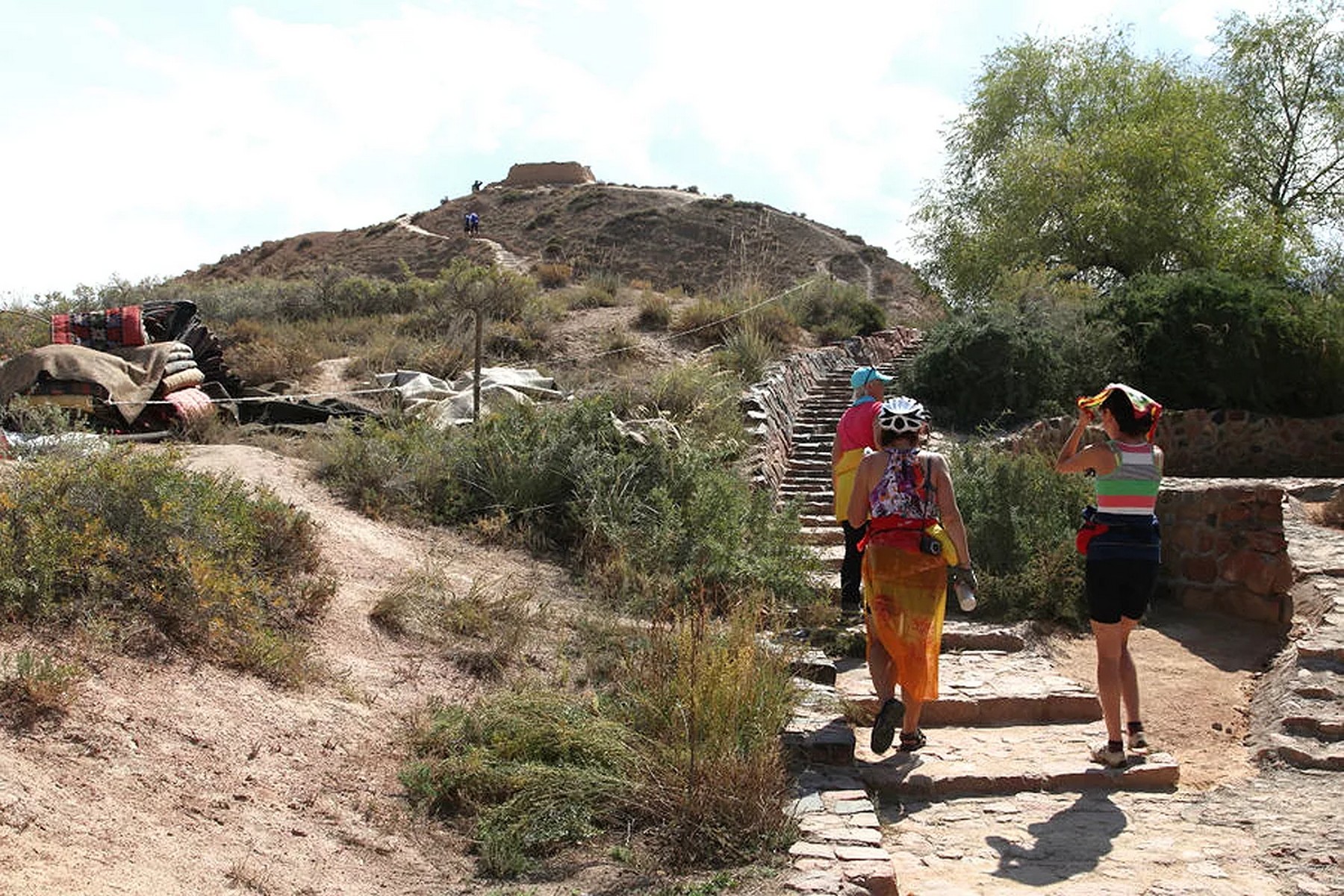
The valley preserves traces of many eras: ancient petroglyphs, ruins of medieval structures, stone pillars, and even Buddhist inscriptions. Its name comes from a legendary seer and religious figure who helped spread Islam among the Kyrgyz. His teachings shaped the spiritual life of local tribes, and his mausoleum still stands atop a hill where pilgrims begin their journey.
Legend intertwines here with the myth of Bugu Ene, the mythical ancestress of the Bugu tribe.
The valley itself resembles a labyrinth of small gorges winding between gentle hills. Among eight sacred willow trees flow the springs that have made the place famous. There are twelve main springs and five additional ones, each believed to possess unique healing properties.
The Manzhyly-Ata spring is said to restore youth and cure heart ailments. The Bugu Ene springs are associated with healing the liver and improving eyesight. Those seeking academic success or enlightenment turn to the Ilim spring, while the waters of Aziz Bulagy are believed to calm the nerves. The Bala spring is visited by those wishing for children, and the Family spring by those longing for harmony in their home.
The valley’s atmosphere—woven from natural beauty, flowing water, and mineral richness—creates a powerful sense of energy that makes it difficult to leave.
Manzhyly-Ata attracts not only pilgrims but also travelers. Local communities celebrate national holidays here, and visitors are often drawn to traditional eagle hunting demonstrations, where golden eagles showcase a centuries-old nomadic practice in a truly captivating spectacle.


Researcher Gulnara Aitpaeva from the Aigine Cultural Research Center has mapped more than 1,100 sacred trees across Kyrgyzstan. Each serves as a focal point for local communities. Some are centuries old, standing in mountain gorges, along roads, and on high passes, adorned with white and colorful ribbons.
Passing by such a tree, one senses that it exists in a parallel spiritual dimension—receiving prayers, holding secrets, and offering silent reassurance.
For travelers, these sites provide a rare opportunity to witness a living spiritual tradition—not preserved behind glass, but thriving in the open air, among mountains and pastures. Kyrgyzstan remains one of the few places where an ancient reverence for nature continues to coexist seamlessly with mosques, modern life, and even smartphones.