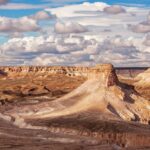
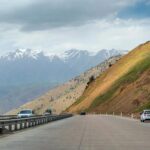
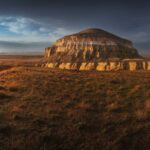
What makes Kyrgyzstan truly extraordinary is how quickly it captures the heart—often before there is time to understand why. The mountains appear almost hand-painted, their colors impossibly vivid, and every turn in the road reveals a new, more breathtaking panorama that demands to be captured.
For those beginning their journey through this remarkable country, a selection of key destinations offers an introduction to its character—generous, rugged, and strikingly beautiful.
Kyrgyzstan’s capital is often treated as a brief stopover before heading into the mountains. Yet spending even a day or two here reveals a city with its own rhythm—eclectic, dynamic, and at times contradictory, but all the more compelling for it. Modern residential complexes stand alongside monumental Soviet-era architecture, while lively squares give way to leafy parks and quiet boulevards that offer refuge from the summer heat.
A natural starting point is Ala-Too Square, where the imposing statue of Manas—the legendary unifier of Kyrgyz tribes—dominates the scene. The surrounding area reflects the city’s diversity: the State History Museum, Oak Park, an open-air sculpture museum, a former church now serving as an exhibition hall, and the Monument of Friendship of Peoples all lie within walking distance. A massive national flag waves at the square’s center, guarded by an honor guard, underscoring the location’s importance for national celebrations.
The State History Museum alone houses over one hundred thousand artifacts, offering a glimpse into the cultural memory of the Kyrgyz people—from traditional costumes and household items to intricate works of art.
For a more vibrant experience, Osh Bazaar provides an immersion into local life. Bustling and slightly chaotic, it is nonetheless irresistibly colorful, filled with stalls of fruit, spices, and embroidered textiles. It is easy to lose one’s way—and just as easy to stumble upon perfect photo opportunities.
No visit is complete without seeing the Central Mosque of Bishkek. Despite its immense scale, it radiates tranquility and harmony, offering a serene contrast to the city’s lively pace.


Just thirty minutes from the capital lies a completely different world. Ala-Archa National Park greets visitors with the scent of pine and peaks that disappear into the clouds. It is a favorite destination for both locals and travelers—some come for a leisurely walk or picnic, while others embark on serious hiking adventures.
Strict regulations—such as limited vehicle access and a ban on open fires—help preserve the park’s pristine nature. These measures ensure that wildlife thrives: marmots, roe deer, and foxes are common sightings, and the elusive snow leopard occasionally appears to the fortunate few.
With over a hundred trails, the park caters to every level of traveler. Options range from gentle walks to more challenging routes leading to Ak-Sai Waterfall or the Ratsek Hut. For experienced adventurers, a modern alpine camp offers the chance to stay overnight and witness sunrise as the mountains blush pink under the first light.
As Kyrgyzstan’s second-largest city, Osh serves as a hub for those drawn to high-altitude expeditions. Yet even without mountaineering ambitions, the city offers compelling sights.
Towering above it is Sulaiman-Too, a sacred mountain and open-air museum recognized as a UNESCO World Heritage Site. The ascent is relatively easy, and the panoramic view from the summit is unforgettable—the city spreads out below like a living map. The mountain itself holds ancient petroglyphs, while a museum carved directly into the rock adds to its uniqueness.
From here begins the legendary Pamir Highway, a dream route for many travelers seeking adventure across some of the world’s most dramatic landscapes.


Issyk-Kul is often described as the heart of Kyrgyzstan—a vast, deep, shimmering lake that never freezes. In summer, its waters warm to comfortable temperatures, while in winter it becomes a haven for migratory birds. On calm days, the surface mirrors the sky; when winds rise, it resembles a restless sea.
The lake’s shores offer contrasting experiences. The northern side is lively, dotted with resorts, beaches, and hot springs. Cholpon-Ata stands out as a popular destination combining relaxation, entertainment, and excellent cuisine.
The southern shore, by contrast, is quieter and more expansive—ideal for those seeking solitude or traveling with tents. Nearby lies Tuzkol Lake, whose buoyant waters and surreal landscapes evoke comparisons to the Dead Sea.
Karakol serves as a gateway to the Tian Shan mountains, with routes leading toward the Inylchek glaciers and major mountaineering camps. The trekking season is short, but the rewards are unforgettable.
Within the town, cultural landmarks deserve attention. The Dungan Mosque, built without a single nail, resembles a vibrant Chinese temple. Nearby, the Holy Trinity Cathedral offers a contrasting yet equally atmospheric experience.
In winter, Karakol transforms into an accessible ski destination, with well-prepared slopes, stunning scenery, and more affordable prices than many European resorts.


Altyn Arashan Gorge combines misty mornings, dense coniferous forests, and natural hot springs that remain warm even in cool weather. The journey there is part of the experience, involving a narrow road with steep drops that adds a sense of adventure.
The reward is unforgettable: bathing in thermal waters surrounded by mountains creates a rare sense of tranquility and connection with nature.
Jety-Oguz Gorge is renowned for its dramatic red rock formations. Seven towering cliffs stand in formation, each resembling a powerful bull. Nearby, the “Broken Heart” rock draws couples, as local lore suggests it brings luck in love.
The surrounding area offers waterfalls, green meadows, and well-maintained trails, making it an ideal destination for families and casual hikers alike.


Located near Cholpon-Ata, these neighboring gorges are easily accessible—even by rental car. Each has a distinct character: one narrow and rocky, the other wide and grassy. Yet both lead to stunning alpine meadows, clear rivers, and pine forests.
Many travelers choose to ascend through one gorge and descend through the other, experiencing both landscapes in a single journey.
Perched over 3,000 meters above sea level, Song-Kul is accessible only in summer and early autumn. The effort required to reach it is richly rewarded.
Here, the landscape is stripped to essentials: mountains, степи, and traditional yurt camps offering overnight stays. The lake’s color shifts with the sky—from azure to gray to unexpected shades of pink. Its waters are so pure they can be drunk, though few dare to swim in its brisk temperatures.


Arslanbob is home to the world’s largest walnut forest, where ancient trees yield abundant harvests year after year. In spring, the valley bursts into bloom; in summer, it offers cool shade and tranquility.
Beyond the forest, the region features diverse attractions: waterfalls, caves, and Saimaluu-Tash, where thousands of ancient carvings—some over 4,000 years old—bear silent witness to the passage of time.
The Kok-Moynok canyons feature vivid red walls and intricate rock formations that seem almost sculpted for the camera. Trails here are relatively easy but require caution, especially after rain. Summer brings intense sunlight and bold colors, while winter softens the scenery into something more mysterious.
Nearby Ala-Kol Lake transforms in winter into a vast natural ice rink with clear blue ice. In summer, its cool waters offer a refreshing experience, while the surrounding views provide endless inspiration—landscapes that feel as though they were created for the silver screen.