As a seasoned traveler who’s ventured into some of the world’s most enigmatic corners, I’ve learned that preconceptions can often overshadow reality. Turkmenistan, often dubbed one of the most closed countries on earth, was no exception for me. Before my trip, I’d read sensational stories about oppressive restrictions on women—no hair dyeing, no manicures, no driving—and imagined a dystopian regime akin to North Korea. But stepping off the plane in Ashgabat, I discovered a nation far more nuanced, vibrant, and welcoming than the headlines suggest. Trust me, as someone who’s navigated bureaucratic borders and slept under desert stars, Turkmenistan offers a unique blend of Soviet relics, ancient traditions, and untamed beauty that’s worth the effort to uncover.
Ashgabat, the capital, immediately captivated me with its stark duality. The old Soviet quarter, a relic of the USSR’s influence (Turkmenistan gained independence in 1991 after centuries under Persian, Russian, and Mongol rule), still boasts bustling markets, a towering Lenin monument, and the haunting “Tree of Life” panel by artist Ernst Neizvestny—a stark reminder of the 1948 earthquake that devastated the city, killing over 100,000 and prompting a rebuilding frenzy. But it’s the new Ashgabat, constructed for the 2017 Asian Games, that truly dazzles. This gleaming metropolis is a UNESCO-recognized wonder, where every building—ministries, hotels, stadiums, and luxury apartments—gleams in pristine white marble. Even the cars are mandated to be white or silver; other colors are banned to maintain the city’s ethereal purity. As I strolled the wide avenues lined with fountains and golden statues (including a massive one of President Turkmenbashi), I felt like I’d wandered into a surreal, sun-bleached dreamscape. It’s not just about aesthetics; this “White City” symbolizes Turkmenistan’s post-independence prosperity, fueled by its vast natural gas reserves, the world’s fourth-largest.
Dispelling another myth: clothing restrictions are minimal. Women tourists, can wear shorts, skirts of any length, or whatever they please without issue. No mandatory hijabs or conservative attire here—Turkmenistan’s secular policies, established under Soviet rule and continued today, prioritize modernity over dogma.
If there’s one symbol that embodies Turkmenistan’s spirit, it’s the Akhal-Teke horse. These majestic creatures, with their golden sheen and slender, athletic builds, are revered as national treasures. Depicted on banknotes, the state emblem, and postage stamps, they trace back to ancient nomadic tribes who bred them for endurance in the harsh Karakum Desert. Each year, on the last Sunday in April, the Day of the Turkmen Horse festival celebrates them with races, parades, and cultural performances—a spectacle I attended, where I watched these graceful animals thunder across the steppe, their coats shimmering like molten gold under the sun.
From personal experience, I’d advise visiting a stud farm near Ashgabat. These horses are incredibly resilient, thriving on minimal feed and adapting to extreme climates. However, overbreeding has diluted their purity, so seeing them in person is a must to appreciate their legendary status.


Turkmenistan’s Islamic heritage is subtle and inclusive, shaped by centuries of Persian and Ottoman influences before Soviet secularization. Mosques dot the landscape, but strict Sharia laws are absent. The crown jewel is the Turkmenbashi Ruhy Mosque in Ashgabat, the world’s largest single-domed mosque when built in the early 2000s (now surpassed by Kazakhstan’s Nur-Astana in Astana). Its grand dome, intricate tilework, and capacity for 10,000 worshippers make it a architectural marvel. I visited during evening prayers, and the acoustics amplified the mu’ezin’s call to a haunting melody that echoed through the marble halls. No headscarves or abayas required for entry—just modest attire. The mosque stays open late, with carpets inviting quiet reflection. It’s a peaceful spot to ponder Turkmenistan’s blend of faith and modernity.
Alcohol flows freely too, another surprise. Beer is light and refreshing, while wines are predominantly sweet due to the hot climate’s high-sugar grapes—think port-like profiles in a dry wine. I sampled a local vintage that reminded me of fortified ports, perfect for toasting the sunset.
And about monuments: Turkmenistan honors its history. Lenin’s statue stands untouched, a testament to the country’s complex past. Unlike some neighbors, they don’t erase eras; they preserve them.
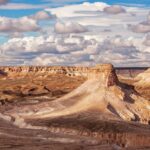
Covering about 70% of the country, the Karakum Desert isn’t the barren wasteland I expected. Yes, it’s arid and vast, but unlike the Sahara’s dunes, it features hardy vegetation: clumps of saxaul shrubs, wild grasses, and even spring flowers that bloom briefly before the heat scorches them. Driving through, I spotted “bald” sand hills signaling nearby villages—local wisdom says people harvest saxaul for firewood, leaving barren patches. Wildlife thrives too: turtles basking on rocks, lizards darting about, and the occasional snake or scorpion (wear sturdy boots!). For adventurers, the Darvaza Gas Crater is a must-see—a fiery pit of natural gas that’s burned since a 1971 Soviet drilling accident. Camping in yurts nearby, under a canopy of stars, was magical, with the distant roar of flames adding an otherworldly soundtrack.
As an expert tip, venture out in spring when greenery peaks, but prepare for scorching summers. The desert’s isolation fosters a profound sense of solitude, ideal for introspection.


The farther from Ashgabat, the more traditional life unfolds. Women in rural areas wear vibrant Turkmen dresses—flowing robes adorned with sequins and patterns—paired with headscarves that frame their faces without concealing hair. It’s a celebration of color and craftsmanship, reflecting the nation’s rich textile heritage. Men often sport embroidered robes, and hospitality is paramount; I was invited to countless teas in homes, sampling plov (rice pilaf) and halva.
Turkmenistan isn’t for spontaneous trips; visas are tricky, and tourism is tightly regulated. You must book through local agencies and travel with a licensed guide—essential for navigating bureaucracy and unlocking historical insights. My guide was invaluable, explaining ancient ruins like the Parthian city of Nisa (a UNESCO site) and pointing out pottery shards that told tales of Silk Road traders. Without one, you’d miss the depth of places like Merv, a medieval metropolis that was once a hub for science and culture.
Pack for extremes: light layers for desert heat, conservative attire for rural visits, and insect repellent. Flights into Ashgabat are your best bet, with internal transport by bus or taxi. Costs are reasonable, but expect to pay for guides (around $50-100/day). Overall, Turkmenistan didn’t blow me away like Machu Picchu, but its subtle charms—white marble dreams, fiery craters, and resilient horses—left an indelible mark. It’s a country rediscovering its identity, and as a traveler, I urge you to explore it before the world catches on. Just remember: patience with red tape rewards you with authentic encounters in one of Central Asia’s last frontiers.