For some reason, most foreign travelers coming to Uzbekistan tend to focus on the same familiar cities. Samarkand and Bukhara enjoy well-deserved admiration, while Tashkent naturally attracts attention as the capital. Meanwhile, Khiva — whose historic center is also listed as a UNESCO World Heritage Site — usually receives far fewer visitors.
The main magnet here is, of course, the Ichan-Kala fortress ensemble, and quite rightly so. Thanks to its remarkable state of preservation, it is arguably one of the most important historical landmarks in Uzbekistan as a whole. Yet Khiva does not end at the fortress walls. In many ways, it only begins there.
Today, I want to talk about a place outside Ichan-Kala that I especially recommend visiting — a site that often remains overlooked, but leaves a surprisingly strong impression.
Nurullabay Palace is a vast architectural ensemble surrounded by a decorative fortress wall. It was constructed in the second half of the 19th century and completed in the early 20th century, during the final decades of the Khiva Khanate.
Although there is a single entrance ticket for the entire territory (in December 2025 it cost 80,000 Uzbek sums), I would conditionally divide the complex into three unequal parts:
The main palace area — a sequence of five courtyards surrounded by two-storey residential galleries. Anyone familiar with Istanbul’s Topkapi Palace will immediately recognize this layout, typical of Islamic ruler residences.
The residence of Ibrahim Khoja, the prime minister of Khiva at the end of the 19th century.
The reception palace of Asfandiyar Khan, the latest building in the complex, constructed already in the 20th century.
When you think of Uzbekistan’s landmarks, what comes to mind? Personally, I often summarize them with the abbreviation “MMM”: madrasahs, mosques, and mausoleums. Residential palaces are surprisingly rare. Samarkand has none at all. Bukhara has a few modest examples, which I’ll discuss another time — but they are exceptions rather than the rule.
Khiva, however, stands apart. Within the walls of Ichan-Kala alone, there are two significant royal residences — Kunya-Ark and Tash-Hauli. Yet the most expansive and ambitious residence of all is Nurullabay Palace, located beyond the old city walls.
And even by Uzbek standards, this complex stands out — both architecturally and in terms of its exhibitions.
Nurullabay Palace feels like a miniature city. One of its greatest highlights is its preserved — or meticulously restored — interiors, which are rare in Uzbekistan.
To appreciate the residential spaces, it’s worth visiting the former residence of Prime Minister Ibrahim Khoja. But above all, I strongly recommend the reception palace of Asfandiyar Khan.
It impresses not only with its lavish decoration and vibrant colors, but also with a detail that is highly unusual for Islamic royal architecture. For comparison: even Dolmabahçe Palace in Istanbul, deliberately designed as a European-style residence, avoids anything like this.
As we know, Islamic tradition forbids the depiction of living beings. Even in Dolmabahçe, wall and ceiling decorations are limited to floral and ornamental motifs. Yet if you look closely at the ceiling patterns in Nurullabay Palace, you may be genuinely surprised to find naked cherubs among the Eastern ornaments.
These are not only depictions of living beings, but also, arguably, subtle references to Christian iconography. One could argue that angels exist in Islam as well — but in the next hall, the ceiling features a distinctly earthly scene, again with nude human figures.
This unexpected blend of cultural influences reflects the era in which the palace was built — a time when Khiva’s rulers were increasingly exposed to European aesthetics, Russian imperial culture, and new artistic ideas, while still remaining deeply rooted in local traditions.


The exhibitions inside Nurullabay Palace are genuinely impressive — not just in scale, but in content. To give you a sense of the scope: each courtyard (and there are five of them, plus the prime minister’s residence and the reception palace) hosts an average of two to four exhibitions.
Of course, some displays are fairly traditional, focusing on local crafts, history, and everyday life. But there are also exhibitions that stand out and deserve special mention.
I would recommend the retro photography exhibition to absolutely everyone.
Did you know that the first professional photographer in Central Asia came from Khiva? I learned about the creative path — and tragic fate — of Khudaybergen Divanov precisely from this exhibition at Nurullabay Palace.


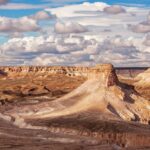
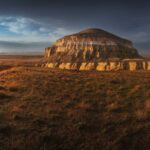
Another highlight for me was the series of painting halls. Alongside works by Uzbek artists, the palace also displays paintings by Kazakh artists depicting the landscapes and spirit of their homeland — a country I have yet to visit myself.
The collection includes landscapes, portraits, traditional painting, and contemporary art. In general, when traveling through Uzbekistan, don’t ignore art exhibitions — they often turn out to be unexpectedly rewarding.
I don’t know whether everything written above is enough to convince you that Nurullabay Palace stands out among Uzbekistan’s many attractions. But I have intentionally avoided retelling every exhibition in detail.
Places like this are meant to be experienced personally. Quite possibly, the thing that stays with you the longest will be something completely different from what impressed me.