Most travelers coming to Uzbekistan limit themselves to the classic trio — Tashkent, Samarkand, and Bukhara. These cities absolutely deserve close attention, but the country hides dozens of other fascinating destinations that rarely make it into standard itineraries. Here are the places we take friends and guests who want to see the real Uzbekistan.
Andijan, the oldest city in the Fergana Valley, was founded more than 2,500 years ago. Once a key stop along the Silk Road, the city has preserved only fragments of its ancient past, yet it remains deeply authentic.
The main point of interest is the Devonaboy Mosque, with its Eastern-style façade and 35-meter minarets. Nearby lies a small park surrounded by dozens of artisan workshops. Here, craftsmen still sew men’s shoes, women’s dresses, and children’s clothing by hand.
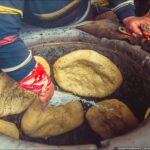
Across the road is the Andijan Bazaar — in my opinion, the most authentic market in Uzbekistan. This is where you’ll find enormous Andijan flatbreads, fresh fruits, and, of course, fragrant spices piled high in open stalls.


Kokand is considered one of the most conservative cities in Uzbekistan. Alcohol is sold in only a handful of shops, and nearly all women wear head coverings.
The city’s main attraction is the Palace of Khudoyar Khan, a UNESCO World Heritage Site. Covering an area of four hectares, the palace boasts remarkably well-preserved galleries. One of its halls features an exquisitely carved wooden ceiling — a true masterpiece of craftsmanship.
Be sure to visit the workshop of Hasan Umarov and purchase one of his unique handmade knives. Fewer than a dozen such masters remain in all of Uzbekistan. They carefully preserve traditions and techniques that are slowly disappearing.
In the city center, you’ll find a small glass pavilion called Totli Halva. This is where the best halva in all of Uzbekistan is made and sold — you’ll hardly find anything like it elsewhere. A box of halva costs around $20–30.


In 2026, a high-speed train — currently connecting Tashkent with Samarkand and Bukhara — is expected to extend to Khiva. This will inevitably bring crowds of tourists, and unfortunately, Khiva may lose part of its unique atmosphere. And that would be a shame, because the city has so much to lose.
Its heart is Ichan-Kala, an ancient inner city enclosed by fortress walls, which has preserved its original layout and structure through the centuries.
The best time to wander here is in the evenings during the low season, when most tourists have already retreated to their hotels. In those moments, you can truly feel as if you’ve stepped into an Eastern fairy tale — all that’s left is to find Aladdin’s lamp.
This small town, just 40 minutes from Tashkent, has become the Mecca of modern Uzbek winemaking. The surrounding landscapes resemble Tuscany — rolling hills and vineyards stretching to the horizon. Somewhere among them, a donkey pulls a wooden cart driven by a gray-bearded old man. Grapes grown in Parkent produce the finest Uzbek wines.
Another major attraction of the area is the Institute of the Sun. Built during the Soviet era, its giant mirror can focus sunlight to reach temperatures of several thousand degrees at a single point. Today, this monumental structure is open to visitors. Interestingly, it was here that the ultra-durable heat shielding for the Buran space shuttle was developed.


The pearl of the desert and the capital of the autonomous Republic of Karakalpakstan, Nukus attracts lovers of art and history alike. It is home to the Savitsky Museum — the world’s second-largest collection of Russian avant-garde art, surpassed only by the Hermitage.
Igor Savitsky, a Soviet artist and visionary collector, brought hundreds of works by once-disfavored artists to remote Nukus. He assembled the collection, opened the museum, and turned it into the best in Uzbekistan. His other great passion was traditional Karakalpak art, to which he devoted years of research and collecting.
But Nukus is fascinating not only for its art. Nearby lies Mizdakhkan, one of the oldest cemeteries in the world, founded in the 4th century BCE. Legends say that the large semi-ruined mausoleum at its center is the tomb of Adam himself. Each year, one brick falls from it. When the last brick falls, the end of time will come. Don’t worry — there are still plenty left.
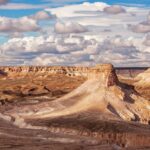
The surroundings of Nukus also offer Zoroastrian Towers of Silence and expeditions to the drying Aral Sea.
Visiting all of these cities in a single trip is unlikely — and not very practical. They’re spread across different regions of the country, making logistics complicated. However, some of them can be combined into one journey.
Let’s calculate an average budget for a one-week trip around Uzbekistan. Prices across regions don’t vary significantly.
We won’t include international flights, as costs vary widely depending on departure location. Decent hotels cost around $30–40 per night, and for that price you can often find places with swimming pools and good breakfasts.
A guide will cost approximately $60–100 per day. Budget $15–20 per meal for food. Taxis in Uzbekistan are very affordable — a cross-city ride via Yandex Go rarely exceeds $3–5.
The biggest expense is souvenirs, because you’ll want to buy almost everything. A beautiful ceramic cup may cost $5, while a stunning handmade carpet can reach $12,000.
In total, a one-week trip to Uzbekistan will cost around $600–800. If you prefer high-quality chain hotels, add about $100 per night. Wine tastings cost $25–40, and workshops average around $10.