“Are you from Tajikistan?”
“No, from Pamir.”
Such exchanges are common in eastern Tajikistan — and they reveal far more than geography.
Legally, Pamir is part of the Gorno-Badakhshan Autonomous Region, an official administrative region of the Republic of Tajikistan. Yet in everyday life, identity in the Pamir Mountains transcends bureaucratic definitions. Suggest to a resident of Khorog that Pamir is “simply a region,” and the response may range from a knowing smile to a thoughtful conversation stretching over several cups of green tea.
Pamir is not merely a territory. It is a mindset shaped by altitude, history, and a powerful sense of belonging.
While Tajik serves as the official state language, daily communication in Pamir often unfolds in Shughni, Wakhi, Rushani, and other Eastern Iranian languages. These languages are not dialects in the casual sense; they carry distinct literary traditions, folklore, and oral histories. Tajik is commonly used for administration and interregional communication, but within families and communities, native Pamiri languages preserve identity across generations.
Most Pamiris follow Ismaili Islam, a branch of Shia Islam distinct from the Sunni majority in Tajikistan. This difference has shaped not only religious practice but also community life, architecture, education, and social norms.
Ismaili communities in Pamir emphasize pluralism, education, and civic responsibility. The spiritual leader of the Ismailis, the Aga Khan, has played a significant role in supporting infrastructure and social development in the region, particularly in Khorog and surrounding districts.
Pamir’s cultural landscape stands apart from the vibrant bazaar traditions of western Tajikistan or neighboring Uzbekistan. Visitors will not find the familiar rhythms of mainstream Central Asian pop music or the bustling Uzbek-style markets. Instead, they encounter distinctive mountain music performed on traditional instruments, homes built according to ancient symbolic designs, and clothing adapted to harsh alpine conditions.
Architecture is especially telling. Traditional Pamiri houses are constructed according to cosmological principles, with five pillars representing sacred figures and skylights designed to reflect spiritual symbolism. Even etiquette carries a different tone — quieter, reserved, yet deeply hospitable.
The phrase “Pamir school” is not metaphorical. The region has developed a unique intellectual and humanitarian tradition. Despite geographic isolation, literacy rates are high, and education is strongly valued. In towns like Khorog and in high-altitude settlements such as Murghab, discussions on literature, philosophy, and global affairs are not unusual.
A distinctive worldview has emerged here — shaped by mountains, isolation, and centuries of adaptation.


Taxi drivers often express local identity in simple yet powerful terms:
“We are not Tajiks. We are Pamiris.”
“What’s the difference?”
“We have the mountains. We have the soul. They have the government.”
Such remarks are not rooted in nationalism, but in a deeply felt sense of cultural worth. Pamir identity is not a political project; it is an emotional and historical one.
Pamir does not appear as a separate state on any map. There are no border crossings or passports marking entry into another nation. Yet culturally and psychologically, it often feels like stepping into a different world.
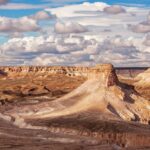
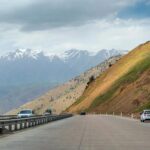
Remote valleys, high-altitude plateaus, and dramatic landscapes along the Pamir Highway reinforce this perception of separateness. Communities remain close-knit, self-reliant, and protective of their traditions.
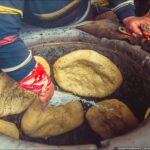
At the same time, hospitality is remarkable. Guests are welcomed with bread, tea, and stories. Conversations unfold slowly, often against a backdrop of snow peaks and rushing rivers.
Pamiris may not always perceive themselves as fully aligned with a broader national narrative. Yet this does not translate into a widespread desire for political independence. What is sought is recognition — respect for language, faith, culture, and historical experience.
Pamir is not a country on paper. It is a country of consciousness — resilient, self-contained, and profoundly human.
For travelers, understanding Pamir means looking beyond administrative borders and discovering a high-altitude society whose identity has been shaped by mountains — and by the quiet certainty of who they are.