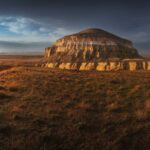
Chiatura stands as a haunting testament to the rise and fall of Soviet-era ambition—a true ghost town built on the crumbling foundations of industrial might. Once a bustling hub teeming with over 30,000 residents, this city now barely clings to life with just around 13,000 inhabitants. In its heyday, Chiatura was arguably the crown jewel of Georgia’s industrial landscape, and for the USSR, it served as a critical powerhouse for manganese extraction, fueling the empire’s insatiable demands for raw materials. But as the Soviet Union disintegrated, so did Chiatura’s fortunes. Factories fell silent, infrastructure decayed, and the once-vibrant metropolis transformed into a sprawling expanse of colorful yet colossal Soviet ruins, drawing adventurers and photographers alike to its eerie allure.
Perched atop a hill overlooking the city, one of the most striking relics is the abandoned Soviet Pioneer Palace. Constructed in the early 1960s by the renowned Georgian architect Chkheidze, this grand structure was a beacon of youthful aspiration and cultural activity. Within its walls, countless circles and workshops flourished—art, science, sports, and more—while an auditorium hosted performances and a museum showcased local history and achievements. The palace operated diligently until 2007, when neglect led to its abandonment, followed by relentless looting that stripped it bare. By 2014, the city authorities deemed it unsafe and slated it for demolition, citing severe structural decay and imminent collapse. Yet, a group of passionate local activists intervened, rallying to save this piece of history from the wrecking ball. Today, whispers of restoration linger in the air, but concrete plans remain elusive, leaving the palace as a poignant symbol of Chiatura’s faded glory.
Reaching this hilltop marvel was once a straightforward affair via a cable car network from the city center, offering visitors a scenic glide through the valley. However, in the summer of 2019, safety concerns prompted the shutdown of these aging systems due to perilous deterioration. Replacement efforts have been agonizingly slow, leaving tourists to rely on road travel by car. For those venturing out, the coordinates GPS 42.28155, 43.28404 will guide you to the spot.