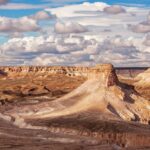
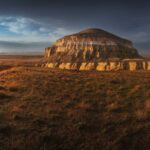
When you think of Uzbekistan, images of turquoise-tiled madrasas, bustling bazaars, and intricate mosaics likely come to mind. But let’s be honest—after a while, even the most dazzling architecture can begin to blur together. What if I told you there’s a place in Uzbekistan that feels raw, ancient, and almost untouched by modern tourism? A place that offers not just history, but a sense of discovery? Welcome to the Sarmishsay Gorge.
Located just 45 km from Navoi and 140 km from Bukhara, this hidden valley is home to one of Central Asia’s most remarkable—and overlooked—archaeological treasures: thousands of ancient petroglyphs carved into sun-scorched cliffs. Some travelers even say that visiting Sarmishsay rivals the profound, almost haunting experience of seeing the Aral Sea. I’d argue it’s even more immersive.
The most affordable way to reach Sarmishsay is by taking a marshrutka or train from Bukhara to Navoi, then hiring a local taxi for the final leg. Alternatively, you can arrange a direct transfer from Bukhara or Samarkand if you prefer comfort over cost. The journey itself—through arid plains and rolling hills—feels like a passage back in time.
Spring is ideal, when sparse greenery and seasonal streams breathe life into the canyon. But autumn, with its softer light and cooler temperatures, offers its own stark beauty. Whenever you go, bring sturdy shoes, sun protection, and—crucially—a pair of binoculars.
Stretching along both sides of the gorge, more than 10,000 ancient rock carvings tell a story millennia in the making. Most date back to the Bronze Age (3000–900 BCE), though some are older, and others much younger. You’ll need to climb carefully—these fragile artworks are unprotected, and sadly, vandalism has taken its toll. There’s no one guarding them, though conservation efforts have been discussed and a UNESCO World Heritage nomination is pending. For now, the site feels wild, uncurated, and profoundly authentic.
The carvings vary widely in style and subject. Look closely and you might recognize:
Archaeologists have catalogued 35 distinct themes here—from weapons and clothing to pagan rites and long-extinct animals. It’s like an open-air museum of human imagination.
Sarmishsay isn’t just about rock art. The entire valley forms a vast archaeological complex spanning 20 square kilometers. You’ll find:
Together, these sites form a cultural tapestry reflecting the lives of countless generations who called this region home.
Don’t expect explanatory plaques or guided tours here. Part of Sarmishsay’s magic is the quiet thrill of discovery. Climb gently. Bring water. Use your binoculars to spot carvings high up the cliffs. And take a moment to simply stand in the silence—a silence that has watched over these stones for thousands of years.
Sarmishsay may not have the glamour of Registan Square, but it offers something rarer: a genuine, unvarnished connection to the deep past. If you’re the kind of traveler who values mystery over monumentality, add this gorge to your list. You won’t regret it.