Most travelers know surprisingly little about the attractions of Tajikistan, which is why they often choose other destinations for their holidays. Yet internationally, this compact Central Asian country is increasingly recognized as a unique travel hub. Tajikistan rewards those who dare to look beyond the obvious with breathtaking scenery, ancient history, and an atmosphere untouched by mass tourism. This guide is designed to give you a comprehensive first impression and help you plan an unforgettable journey.
What draws visitors here above all is the country’s extraordinary natural diversity. In mountainous regions, travelers are greeted by sky-piercing peaks, deep gorges, glacial valleys, and vast high-altitude plateaus. In lower areas, national parks and fertile valleys invite scenic road trips and outdoor adventures. Most excursions in Tajikistan extend beyond city limits, immersing visitors in raw landscapes and remote villages. That said, cities also offer compelling experiences: museums, archaeological sites, and well-preserved fortifications from various historical periods. Deciding where to go in Tajikistan depends on personal priorities—and this overview highlights the most popular and rewarding destinations.
To ensure your trip leaves only positive impressions, it’s important not only to understand Tajikistan’s attractions but also to decide what matters more to you: modern comfort or the romance of mountain life. High-quality hotels are mainly concentrated in Dushanbe, the capital. However, staying in foothill villages or Pamir settlements offers a rare opportunity to experience authentic local life, traditional hospitality, and centuries-old customs. Once you’ve decided on your travel style—and whether you’re traveling solo, with children, friends, or a partner—you can begin exploring the country’s most remarkable sights.
Lake Karakul is located in the Gorno-Badakhshan Autonomous Region at an altitude of over 3,900 meters above sea level. This vast alpine lake captivates visitors with its stark beauty and impressive size—covering approximately 380 square kilometers, it is the largest lake in eastern Tajikistan. Surrounded by barren mountains and endless skies, Karakul offers complete silence broken only by the sounds of nature, making it a favorite retreat for travelers seeking solitude and mental escape from urban life.
Swimming here is possible but not for everyone: even in summer, water temperatures rarely exceed 10–12°C (50–54°F). The lake is renowned for its remarkable clarity, with visibility reaching depths of up to nine meters. The surrounding villages provide a glimpse into life at extreme altitudes, where traditions remain largely unchanged.


The Fann Mountains are part of the Pamir-Alay system in western Tajikistan and are famous for their dramatic peaks, turquoise lakes, glaciers, and fast-flowing rivers. This region is a paradise for both adventure seekers and hiking enthusiasts. White-water rafting routes follow powerful mountain rivers, while trekking trails lead to iconic lakes such as Iskanderkul, Alauddin, and Kulikalon.
One of the reasons the Fann Mountains are so popular is their relatively developed tourism infrastructure. The region is easily accessible via Samarkand in neighboring Uzbekistan, making it a convenient addition to a Central Asian itinerary. Travelers will find guesthouses, campsites, equipment rental points, and small eateries serving hearty local cuisine at reasonable prices.
The Pamirs, often called the “Roof of the World,” form a colossal mountain system bordering the Himalayas and include three peaks rising above 7,000 meters. Vast glaciers dominate the landscape, and snow caps remain year-round, even during summer months. This remote and majestic region attracts experienced mountaineers and extreme travelers seeking challenging ascents in harsh climatic conditions.
Several base camps and altitude camps are set up to support expeditions. Despite ongoing geopolitical sensitivities in the region, tourist safety is well maintained. However, travelers venturing into the Pamirs are strongly advised to inform local authorities in advance. This ensures that rescue services can respond quickly in case of avalanches, landslides, or other emergencies.

Few visitors come to Tajikistan for just a single day, but if you ever find yourself with limited time in the capital, the Dushanbe Flagpole is an essential landmark. Standing at approximately 165 meters, it was once the tallest flagpole in the world and remains a powerful symbol of national pride.
The enormous national flag flies near the Palace of Nations and was erected at a cost exceeding 3.5 million USD. The project was designed and manufactured by specialists from Dubai, while local teams handled installation. The surrounding square is a popular spot for walks, photography, and evening strolls.


The National Museum of Tajikistan is one of the most visited cultural sites in Dushanbe. Its exhibitions offer a deep dive into the country’s history—from ancient civilizations and the Silk Road era to Soviet times and modern independence. Special sections are dedicated to geological and scientific expeditions, particularly those exploring the still-mysterious Pamir region.
The museum itself is an architectural landmark, featuring elegant neoclassical and baroque elements. It is surrounded by landscaped parkland with shaded paths and benches, making it a pleasant place to relax after exploring the exhibits. New artifacts are regularly added, ensuring that even repeat visitors discover something new.

The Monument to Ismail Samani is one of the most iconic landmarks of Dushanbe and a key symbol of modern Tajik national identity. Rising to a height of about 25 meters, it dominates Friendship Square in the heart of the capital. The monument was erected in 1999 to commemorate Ismail Samani, the founder of the Samanid dynasty and one of the most revered rulers in the region’s history.
Often described as the most “ornate” monument in the country, it impresses visitors with its grand proportions, golden decorative elements, and monumental arch framing the statue. The monument is especially striking at night, when it is illuminated and becomes a focal point of the city’s main ceremonial square.
Khujand Fortress is one of the oldest defensive structures in Central Asia, originally built between the 6th and 5th centuries BCE. Over the centuries, it played a crucial role in protecting the city of Khujand, strategically located on the Silk Road. During the Mongol invasion led by Genghis Khan, the fortress fiercely resisted attack—forcing the conqueror to deploy an army of nearly 75,000 warriors to break its defenses.
Although the original fortifications were largely destroyed, the complex was later rebuilt and served for centuries as a residence for local rulers. Today, the restored fortress houses a historical museum and offers panoramic views of the Syr Darya River, making it both an educational and scenic stop.


Frequently mentioned in lists of must-see attractions in Tajikistan, Hissar Fortress boasts a history spanning more than 2,500 years. Remarkably well preserved, its massive walls—over one meter thick in places—once served as a formidable defensive barrier and a residence for ruling dynasties.
Located just outside Dushanbe, the fortress complex includes gates, madrasas, a caravanserai, and remnants of administrative buildings. Walking through Hissar feels like stepping back into a time when the region was a crossroads of empires and cultures.

Ajina-Tepe is the archaeological site of a Buddhist monastery discovered in the early 1960s. Dating back to the 7th–8th centuries, it provides rare evidence of Buddhism’s historical presence in Central Asia. Excavations revealed monastic buildings, household items, wall paintings, and religious artifacts.
The site’s most famous discovery is a colossal reclining Buddha statue made of clay. No other sculpture of comparable size has been found in the Central Asian region, making Ajina-Tepe a site of exceptional historical and cultural significance.
Sarazm is one of the oldest known settlements in Central Asia and was discovered by archaeologists around fifty years ago. The site preserves remnants of residential buildings, workshops, tools, and everyday objects dating back to the 4th–2nd millennia BCE.
A UNESCO World Heritage Site, Sarazm offers valuable insight into early urban development, trade, and craftsmanship in the region. It is a must-visit destination for travelers interested in archaeology, ancient history, and educational tourism.

Covering more than 2.5 million hectares, Tajik National Park is one of the largest protected areas in Central Asia. Recognized as a UNESCO World Heritage Site, it encompasses vast stretches of pristine mountains, glaciers, alpine meadows, and high-altitude deserts.
The park is a paradise for eco-tourists, trekkers, and wildlife enthusiasts, offering crystal-clear air, untouched landscapes, and rare flora and fauna. Many of Tajikistan’s highest peaks and most dramatic mountain scenery lie within its boundaries.
Although Tajikistan is relatively small in size—ranking last by area among Central Asian countries—its attractions, especially natural ones, are astonishingly diverse. The destinations listed below may not always appear in standard rankings, but they are no less captivating and can greatly enrich any travel itinerary.


The Kayrakkum Reservoir, often referred to by locals as the “sea,” is an artificial body of water created nearly a century ago. Along its shores, visitors will find health resorts, children’s camps, and recreational facilities typical of classic lakeside vacations.
Here, travelers can swim, sunbathe, fish, take boat trips, or enjoy birdwatching. The reservoir is especially popular during the warmer months, offering a relaxing contrast to mountain travel.
Iskanderkul is a legendary mountain lake nestled in the heart of the Fann Mountains at an altitude of about 2,000 meters. Its name is linked to ancient legends claiming that Alexander the Great (Iskander) once passed through the area and lost his horse here.
Surrounded by dramatic peaks and waterfalls, the lake is one of Tajikistan’s most picturesque natural attractions and a highlight for hikers, photographers, and nature lovers.


The Garmchashma hot spring is renowned not only for its scenic setting but also for its therapeutic properties. The mineral-rich waters have been considered healing since ancient times, leading to the establishment of altars in the past and, later, a balneological health resort.
Today, visitors can bathe in naturally heated pools while enjoying mountain views, combining relaxation with wellness tourism.

Sarez Lake is one of Tajikistan’s most extraordinary natural wonders. Unlike most lakes, it is just over a century old, having formed after a powerful earthquake in the early 20th century. A massive landslide from the Muzkol Range created a natural dam, trapping the waters of the Murghab River.
The lake stretches across nearly 80 square kilometers at an altitude of about 3,200 meters, with depths reaching over 200 meters. Remote and awe-inspiring, Sarez Lake is a dream destination for adventurous travelers.
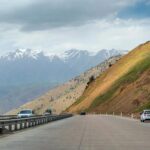
The Pamir Highway is often described as one of the most scenic high-altitude roads in the world. Stretching between Khorog and Osh (in Kyrgyzstan), it winds through deep gorges, vast plateaus with almost Martian landscapes, and remote mountain deserts.
While it is possible to drive the route in a rental car, traveling by bus or with an experienced guide allows visitors to fully absorb the scenery without the stress of navigating challenging terrain. Every kilometer offers breathtaking views and a sense of true exploration.
All of these attractions reveal different facets of Tajikistan, and each traveler will naturally gravitate toward what resonates most—be it national parks, archaeological sites, or mountain adventures. This overview, complete with descriptions and imagery, can serve as a foundation for planning your trip.
Keep in mind that many of Tajikistan’s highlights are located in high-altitude areas, so even in summer, warm clothing is essential. If you are unsure which places to prioritize, take a few minutes to read reviews from other travelers.