When people talk about Kazakhstan, the same names tend to surface first: the Charyn Canyon, Borovoe, Lake Kolsai, or the mountains around Almaty. But the country is far wider, deeper, and far more unexpected than that. Hidden among the Kazakh steppes are true gems — places you have probably never heard of, yet once seen, they are impossible to forget.
This is not just another list. It is an invitation to explore an alternative Kazakhstan — one that rarely appears in social-media recommendations, but is capable of stealing your heart at first sight.

Where: Almaty Region, Kegen District
What makes it unique: A mirror-like mountain lake framed by cliffs, less popular than Kolsai and Kaindy yet absolutely equal to them in beauty.
Lake Kogutai lies high in the foothills of the Tian Shan, surrounded by rugged slopes, alpine meadows, and silence so deep that you can hear the wind moving through the grass. The water remains astonishingly clear, reflecting the sky like polished glass, and its color changes from sapphire to emerald depending on the light.
Why you should go:
Nearby villages still keep traditional ways of life: kumis, tandyr bread, starry skies without city lights, and stories told around a fire.
How to get there: Best reached by off-road vehicle or with local guides from the Kegen district, as the road is scenic but rough and weather-dependent.


Where: Mangystau Region, on the border with Uzbekistan
What makes it unique: Landscapes that resemble Mars — dramatic escarpments, surreal rock formations, and an endless horizon.
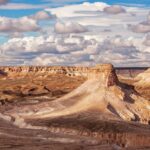
Ustyurt is not just a plateau; it feels like another planet. White cliffs, salt flats, wind-sculpted buttes, and plateaus fall away into huge bowl-shaped depressions. Sunrise and sunset here are otherworldly — the colors shift from milk-white to fire-red within minutes.
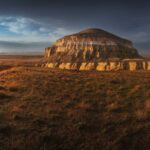
The famous Bozzhyra valley and the iconic solitary mountain Sherkala (“Lion Mountain”) are nearby, both among the most photographed places in the country — yet still astonishingly quiet.
Why you should go:
You may also encounter saigas, foxes, and steppe eagles — reminders that life still thrives in what seems an empty land.
How to get there: The best option is a multi-day jeep tour from Aktau, usually 2–3 days with camping under a sky full of stars.
Where: Turkestan Region, western Tian Shan
What makes it unique: The oldest nature reserve in Kazakhstan, a paradise for botanists, birdwatchers, and lovers of pristine wilderness.
Aksu–Zhabagly is a UNESCO biosphere reserve and one of the most biodiverse regions in Central Asia. Here snow leopards roam high ridges, brown bears wander forests, and mountain streams carve deep gorges. In spring, the slopes are carpeted with tulips — Kazakhstan is, after all, the homeland of wild tulips.
Why you should go:
The reserve protects juniper forests, alpine valleys, and glacial rivers — and offers quiet trails where you may walk for hours without seeing another person.
How to get there: From Shymkent by minibus or taxi, then on foot with a guide — entry is controlled to protect the ecosystem.


Where: Ulytau District, Karaganda Region
What makes it unique: A completely non-touristic area combining ancient burial sites, sacred places, and profound stillness.
This region is the spiritual heart of the Kazakh steppe. Ulytau is tied to key events of the Golden Horde, the khans, and ancient nomadic migrations. Around Aktas and Lake Karakol you will find mausoleums, memorial stones, petroglyphs, and landscapes untouched by mass tourism.
Why you should go:
Karakol itself is calm and wind-rippled, especially beautiful at sunset when the steppe glows with copper light.
How to get there: By private vehicle or with an organized tour from Karaganda; public transport is limited.
Where: Southern Kazakhstan, near Taraz
What makes it unique: Among the oldest mountain ranges in Central Asia, home to petroglyphs over 3,000 years old.
The Karatau range holds traces of the earliest civilizations of the steppe. On its slopes are scattered ancient burials, ritual sites, and petroglyphs depicting hunters, animals, and solar symbols. Hiking here means walking through a living open-air museum surrounded by wild thyme scent and sweeping valley views.
Why you should go:
Nearby Taraz — one of the oldest cities in Kazakhstan — adds historical depth with its mausoleums and medieval heritage.
How to get there: From Taraz by rented car or with a knowledgeable local guide who knows the petroglyph sites.
Hidden Kazakhstan is not silent — it just speaks more softly. Those who listen are rewarded with landscapes that feel eternal, skies that seem too large to be real, and the feeling of discovering something before it becomes famous.