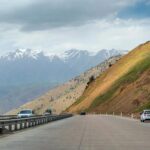
Nestled in the upper reaches of the Aragvi River near the village of Kvesheti, the Khada Gorge unfolds as a breathtaking spectacle framed by emerald-green slopes. This picturesque valley, where the small mountain stream Hadistskali flows into the Aragvi near Kvesheti settlement, is a gem of natural and historical wonder in Georgia’s historical region of Mtiuleti. Known locally as the “Gorge of Towers,” Hada remains a wild, atmospheric haven, far from the crowds, offering an authentic glimpse into the Caucasus’ rugged soul. Far from being an inaccessible outpost, it’s a scenic detour off the Georgian Military Highway, with an 8-kilometer drivable stretch of dirt roads passable by any reasonably high-clearance vehicle. The gorge’s starting coordinates are 42.430174, 44.552235, marking the gateway to an 11-kilometer expanse dotted with scattered settlements—many now abandoned, reviving only in summer with weekenders and dacha-goers.
In bygone eras, locals built homes high on the slopes to shield against enemy raids, a defensive strategy that left upper villages empty today. Yet, one hamlet, Bedoni, thrives year-round, and nearby lies a mineral spring rich in iron, its waters staining the surroundings rusty hues. Centuries ago, a temple stood by this spring, but only ruins remain now, whispering of forgotten rituals. Khada’s proximity to Gudauri makes it a favorite for day trips, where visitors stroll through sunlit meadows in summer or crisp snowy valleys in winter. From its heights, panoramic views reveal the gorge’s settlements and towering sentinels—those iconic towers that give the valley its name.


“Khada” translates to “mountain” or “mountainous place,” but folklore paints a grander picture: legends speak of 60 towers once adorning the slopes, with locals recalling a time when the entire landscape was fortified with these striking structures. Today, fewer than a dozen survive, their visibility often obscured from the valley floor. Perched atop ridges above villages, these towers demand a hearty hike from the road. Architecturally unique, they feature a square facade on one side and a rounded one on the other, the curved part always facing uphill—likely a design to deflect avalanches, common in this avalanche-prone terrain. According to local mountaineers, the towers once safeguarded village treasures and relics, serving as communal vaults. Unlike the Svanetian towers built within courtyards, Hada’s stand isolated on peaks and ridges, suggesting their primary role as watchtowers and signaling posts. Through this gorge once ran a vital road, a safer alternative to the Aragvi Gorge route, used extensively until the 19th century as a bypass to Gudauri via a gentler ascent.

This historical significance is set to evolve: starting this year, a new wide road with tunnels is under construction through Hada, bypassing the often snow-blocked Cross Pass. In a few years, trucks and buses may rumble through here, relegating the old Cross Pass route to tourists alone. For those yearning to witness Hada’s unspoiled charm before modernization, now is the time to visit—within the next year, ideally.
The valley’s inhabitants are the hardy Mtiuls and Khevsurs, who summer here tending sheep on alpine pastures and harvesting mountain honey from beehives. Around a dozen settlements cluster here, with the twin villages of Beniani-Begoni forming the heart. What draws explorers? The towers, of course—accessible via hikes, or for a closer look, the Iukho village tower, reachable with a short uphill climb from the road. Nature reigns supreme: the gorge’s early stretches boast bizarre volcanic rock formations, including a cave fortress built tens of meters above ground in one such cliff, once guarding against invasions from below.
Further along, the iron-rich mineral spring at coordinates 42.450698, 44.528467 won’t escape notice—its rusty outflows from a lava-like rock, flanked by a stone structure with a cross: niches for worship, a relic blending pagan and Christian traditions. As you drive, a waterfall awaits (42.456043, 44.528606), fuller in spring and early summer than photos suggest. At the gorge’s end, near the village of Tskere, hike along the Hadistskali’s left bank to another cascade (42.488167, 44.538723), best viewed in early summer; whispers of a third waterfall higher upstream add to the allure.


In Begoni village stands the gorge’s main church, alongside a cemetery, while smaller chapels in other settlements blend seamlessly into the landscape, often mistaken for barns. Hada lacks public transport; reach it by Gudauri or Kazbek marshrutka to Kvesheti, then ford the river on foot—for a full exploration, plan hikes and camping. Alternatively, opt for a day-long jeep tour from Tbilisi to cover the valley comfortably.
Khada Gorge is more than a scenic drive; it’s a portal to Georgia’s ancestral past, where ancient towers pierce the sky, mineral springs bubble with earthy secrets, and waterfalls roar in harmony with the winds. As new roads loom, seize the chance to wander this untouched realm, where history and nature intertwine in breathtaking solitude. Pack your boots, embrace the dirt roads, and discover why this gorge deserves its place among Georgia’s hidden treasures.