When the heat of summer fades and the first golden leaves begin to shimmer on the slopes of the Tian Shan mountains, Kazakhstan transforms. Autumn here isn’t just a change of season — it’s a feeling. The air becomes sharper and more transparent, the light turns soft and honey-colored, and the crowds that filled the trails in summer quietly disappear. What remains is a sense of peace — the perfect backdrop for those seeking solitude, reflection, and beauty untouched by noise.
“Autumn is a time for solitude,” says Galiya Orzabaeva, founder of a local travel agency in Almaty. “At this time of year, travelers want something more personal — silence, meaning, and connection with nature. That’s what makes the Almaty Region so special.”
According to Orzabaeva, fall is one of the most inspiring times to explore the Almaty Region — a land of contrasts where turquoise mountain lakes meet glowing birch forests, and vast canyons rise from the steppe. The most popular routes remain timeless: Kolsai and Kaindy Lakes, the Charyn Canyon, Turgen Gorge, and the Big Almaty Lake.
“These places have a completely different mood in autumn,” she explains. “The birch groves turn gold, the lakes take on a deep sapphire hue, and the air feels alive. There are fewer tourists, and people can finally slow down, breathe, and simply enjoy.”
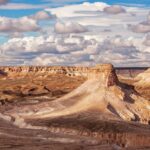
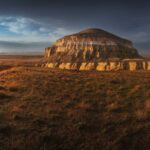
Kaindy Lake — with its ghostly submerged forest and bright autumn colors — looks like a scene from a fantasy film. Charyn Canyon glows with pink and terracotta tones under the low autumn sun, while Kolsai’s still waters mirror the fiery slopes around them. And on the Assy Plateau, visitors find endless horizons, soft wind, and silence so deep it feels almost sacred.

Autumn tourism in Kazakhstan is shifting toward the intimate and emotional. “If summer is for long multi-day tours, autumn is for short escapes,” says Orzabaeva. “People go for a day just to breathe the mountain air, drink tea by the fire, and take a few photos. It’s like an emotional reset.”
The agency focuses on comfort and authenticity rather than quantity. The overnight tour to Assy Plateau remains a favorite — a retreat under the starry sky with no cell signal, just peace and the sound of wind across the highland grass. Classic routes have been improved with more photo stops, storytelling about local legends, and eco-education sessions. “More travelers want to understand how to protect the environment,” Orzabaeva notes.
While locals often return to their favorite spots year after year, international travelers are discovering Kazakhstan as a hidden gem of Central Asia. Visitors come from India, the UAE, China, Turkey, Mongolia, Europe, and the U.S., drawn by its untouched nature and sense of freedom.
“They’re amazed by how vast and diverse our landscapes are,” says Orzabaeva. “In a single day, you can drive from endless steppe to glaciers, from desert canyons to alpine meadows. What surprises them most is the silence — the feeling of being alone with the earth. Many say, ‘Your mountains feel alive.’ For us, that’s the best compliment.”
Autumn’s beauty also brings responsibility. The agency puts safety first: guides undergo regular training, equipment is checked before each tour, and travelers are informed about weather, clothing, and trail conditions. “In the mountains, the temperature can drop quickly,” Orzabaeva explains. “Warm, waterproof clothing and proper footwear are a must. We remind everyone — no going too close to cliffs, no feeding wild animals, and always stay with the group.”
For first-time visitors, Orzabaeva recommends the Big Almaty Lake and Issyk Lake — easy to reach, incredibly scenic, and perfect introductions to Kazakhstan’s mountain spirit. The Charyn Canyon, often called the “younger brother of the Grand Canyon,” offers something the American one rarely can — complete silence.
“When you stand on the edge of Charyn and hear nothing but the wind,” she says, “you realize how small you are — and how big the world still is.”
The agency is already preparing for winter, planning shorter but richer routes and expanding cross-border tours to Kyrgyzstan. Winter programs for international tourists will include ice skating, skiing, horseback rides, and overnight stays in yurts, showing that Kazakhstan’s magic doesn’t fade with the snow — it simply changes color.
According to the Tourism Department of the Almaty Region, over 1.4 million tourists visited the area in the first nine months of 2025, including more than 320,000 foreign guests. Autumn tourism continues to grow, with local travel in September–October up 12% from last year.
Kazakhstan is rapidly becoming one of the most photogenic and welcoming destinations in Central Asia. Here, autumn isn’t the end of the season — it’s when journeys become more soulful, when nature whispers instead of shouts, and when travelers find not only landscapes, but peace.